




In water quality testing, clarity is more than a visual preference — it is a critical indicator of safety and system performance. Many professionals ask a key question: what does low turbidity mean, and why does it matter so much in drinking water, water treatment plants, and industrial applications?
This article explains the meaning of low turbidity, its practical significance, and how precise monitoring solutions help users maintain consistently safe and compliant water systems.
What does low turbidity mean in practical terms? Turbidity refers to the cloudiness of water caused by suspended particles such as silt, organic matter, or microorganisms. It is measured in Nephelometric Turbidity Units (NTU).
Low turbidity means that the water contains very few suspended particles. Visually, this water appears clear. Technically, it usually indicates turbidity levels below 1 NTU, and in many drinking water systems, even lower targets such as 0.3 NTU or less are required.
From a testing perspective, low turbidity water signals that filtration and treatment processes are functioning effectively, but it also introduces a new challenge: accurate measurement at very low NTU levels.
Maintaining low turbidity is essential for both safety and compliance. High turbidity can shield harmful microorganisms from disinfectants, reducing the effectiveness of chlorination or UV treatment.
When turbidity is low:
Disinfection processes work more efficiently
Pathogen risks are reduced
Water meets regulatory and export quality requirements
This is why drinking water turbidity standards are widely enforced in municipal supply systems, secondary water supply networks, and end-of-pipeline monitoring points. However, achieving low turbidity is only half the task — verifying it continuously is equally important.
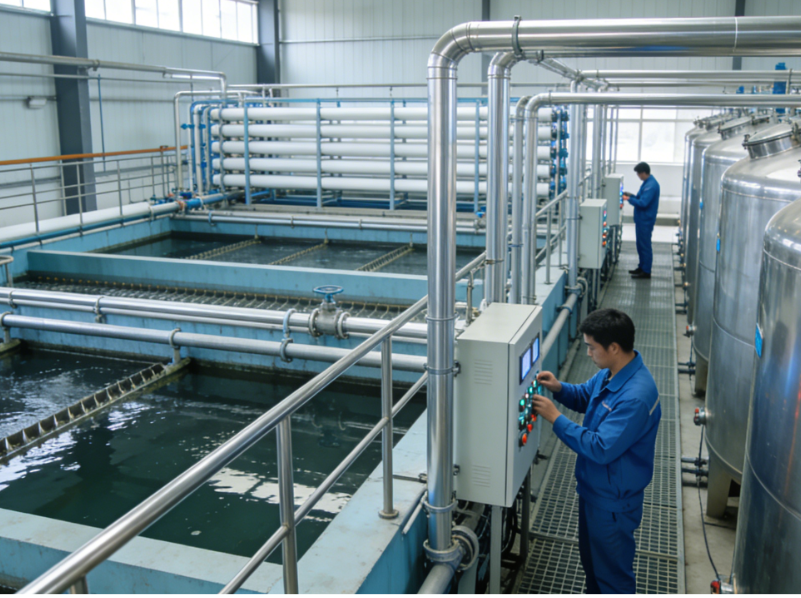
Low turbidity can result from both natural and engineered factors. High-quality source water, such as protected surface water or treated groundwater, may naturally show low turbidity.
More commonly, low turbidity is achieved through treatment processes including:
Coagulation and sedimentation
Sand or membrane filtration
Advanced purification systems
In membrane filtration systems and finished drinking water pipelines, turbidity values are often extremely low, making precision monitoring critical to detect even small fluctuations.
Measuring low turbidity is far more demanding than measuring high turbidity. Standard sensors often lack the resolution and stability needed at very low NTU levels, leading to inaccurate or unstable readings.
Modern water systems increasingly rely on online turbidity sensor solutions rather than portable instruments. Online systems provide:
Continuous real-time data
Stable measurement at ultra-low NTU
Integration with control systems for alarms and reporting
For applications such as drinking water, swimming pools, and membrane filtration outlets, high precision and low detection limits are essential.
Users managing low-turbidity environments face several challenges: unstable readings, frequent maintenance, and lack of remote visibility. The ERUN-SZ2-B-B6C is designed specifically to solve these problems.
This low-range turbidity sensor delivers ultra-low turbidity detection with a measurement range of 0–10 NTU (customizable), a resolution of 0.001 NTU, and precision of ±2% or ±0.01 NTU. For customers, this means reliable measurement even when turbidity changes are extremely subtle.
Unlike traditional instruments, the sensor is maintenance-free for long-term operation and designed with a water-saving structure, reducing operational costs. Digital output and RS485-Modbus communication allow seamless integration into existing monitoring systems.
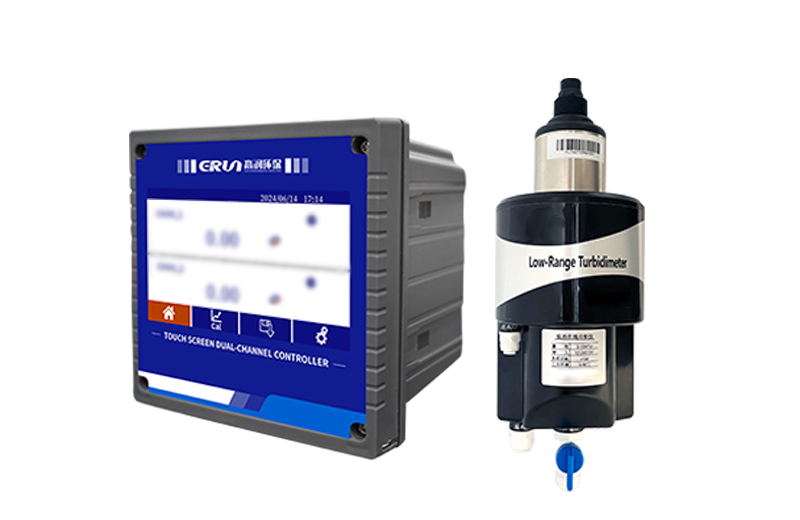
For users who need remote oversight, the sensor supports cloud platforms and mobile phone data monitoring, enabling real-time visibility without on-site inspections. This is especially valuable for waterworks export monitoring, secondary water supply systems, and pipeline end water quality control.
So, what does low turbidity mean today? It represents not only clean-looking water, but also effective treatment, regulatory compliance, and operational reliability. However, low turbidity demands high-precision monitoring to ensure safety is maintained over time.
With advanced solutions like the ERUN-SZ2-B-B6C, water professionals can confidently monitor low turbidity levels in real time, detect early risks, and maintain consistent water quality across critical applications.


