




Tightening global water quality regulations have raised standards for accurate, reliable Biochemical Oxygen Demand (BOD) testing. For third-party environmental labs, wastewater treatment facilities and monitoring stations, selecting a qualified BOD analyzer is critical to regulatory compliance, credible test data and operational efficiency.
The global BOD analyzer market was valued at USD 96.27 million in 2025 and is forecast to reach USD 140.73 million by 2032, with a 5.57% CAGR. This growth is driven by stricter regulatory supervision and a sector shift toward automated, safe and digitally integrated lab instruments. This guide outlines professional, evidence-based criteria for selecting high-performance lab-grade BOD analyzers for environmental testing scenarios.
Two mainstream methods are adopted for standard BOD5 detection: the traditional dilution and inoculation method (5210 B) and the differential pressure method (5210 D).
As a classic standard method, the dilution method applies to most water samples yet features obvious drawbacks: complex reagent preparation, long test cycles and high reliance on operator experience, easily causing inconsistent test results and poor repeatability for accredited labs.
In contrast, the differential pressure method delivers simpler operation and stable, credible data consistent with standard dilution method results. Themercury-free differential pressure technology further eliminates mercury exposure risks, complying with modern laboratory safety and environmental standards. It is highly suitable for high-throughput detection of municipal sewage and industrial wastewater with high BOD concentrations.
Professional laboratory procurement prioritizes practical performance beyond nominal parameters, with key criteria as follows:
1. High detection precision and stability: Instrument accuracy must be verifiable with standard reference solutions. Stable repeated detection results and low blank fluctuation are basic guarantees of credible experimental data.
2. Full-automatic unattended operation: Automated one-cycle testing eliminates manual on-duty requirements, effectively easing lab staffing pressure and improving sample processing efficiency.
3. Flexible sample batch processing: Independent test terminals support adding new test groups midway through ongoing detection, adapting to random sample delivery in third-party testing scenarios.
4. Complete long-term data traceability: Automatic data recording and long-term data storage avoid manual entry errors, facilitating regulatory audits and historical data analysis.
5. Diversified incubation and high throughput: Multi-channel simultaneous detection and adjustable incubation cycles support standard BOD5, BOD7 and extended ultimate BOD testing to meet diverse experimental demands.
6. Safe and environmentally friendly design: Mercury-free design protects operator health, reduces hazardous waste disposal costs and meets sustainable laboratory construction requirements.
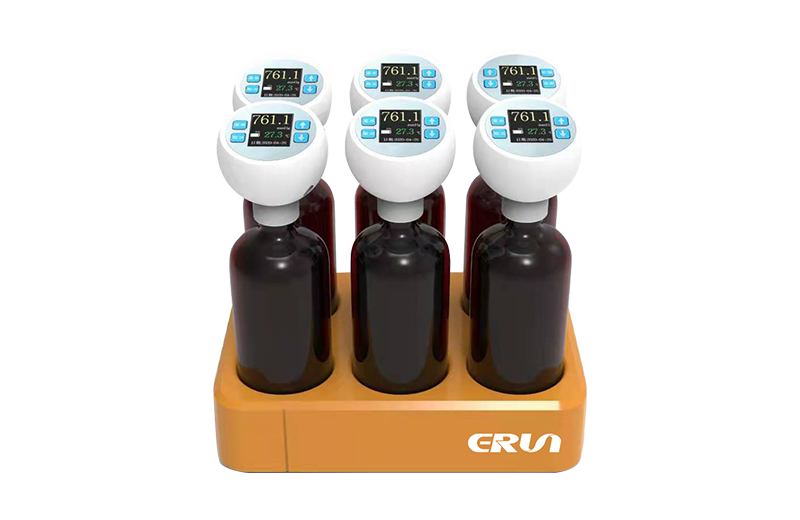
Tailored for environmental monitoring stations, third-party testing institutions and wastewater treatment laboratories, the ERUN-SLBOD-B Intelligent BOD Water Quality Tester fully meets high-standard laboratory detection requirements with mature mercury-free differential pressure sensing technology.
The instrument directly outputs BOD concentration values without manual calculation, eliminating human errors. It supports a 0–4000 mg/L direct measurement range and 0.01 mg/L high resolution, covering conventional water bodies from surface water to high-concentration industrial wastewater.
Core Advantages
6 independent test channels with programmable magnetic stirring for simultaneous multi-sample detection
Fully automatic testing process, no manual attendance required during incubation
10-year automatic data storage to support audit traceability and data analysis
1–30 days adjustable incubation cycle, compatible with various BOD detection protocols
≥2 years long-life built-in battery, ensuring stable detection during short-term power outages
Compliance Certification
Manufactured under ISO 9001 quality management system, the instrument has passed CE and RoHS certifications, complying with international laboratory instrument standards.
Product details and technical documents: https://www.erunwas.com/products-detail/id-214.html
For laboratories certified by ISO/IEC 17025, NELAC and other authoritative systems, BOD detection accuracy is a mandatory regulatory requirement rather than a marketing feature. Qualified BOD analyzers must integrate standardized detection methodology, complete data traceability and reliable operational safety to ensure all test data is scientific, traceable and defensible.
Erun Scientific — Precision Water Quality Analyzers for Global Environmental Compliance.


