




Ozone (O₃) is widely used in drinking water treatment, aquaculture, food processing, and wastewater disinfection because of its strong oxidation ability. But while ozone is effective, its concentration must be accurately controlled—too little ozone reduces disinfection efficiency, while too much can cause corrosion, residual toxicity, or oxidation by-products.
So, how do you test for ozone in water? And which method delivers accurate, fast, and convenient measurement, especially during field testing?
This article explains the major ozone-in-water testing methods, compares their accuracy, and shows how the ERUN-SP7 Portable Multi-Parameter Water Quality Detector simplifies ozone detection across multiple industries.
Ozone is an oxidizing disinfectant used for:
Purifying drinking water
Sterilizing process water in food and beverage facilities
Maintaining safe aquaculture environments
Reducing odors and pollutants in wastewater treatment
Oxidation of organic contaminants
However, ozone is unstable and decomposes rapidly into oxygen. Because of this, real-time testing is crucial to ensure the treatment process is effective and safe.

Below are the four most widely used ozone detection methods.
This is the most commonly used technique in laboratories and field applications.
How it works:
DPD (N, N-diethyl-p-phenylenediamine) reagent reacts with ozone, producing a pink color.
The deeper the color, the higher the ozone concentration.
Pros:
Easy to operate
Good for on-site testing
Low cost
Cons:
Requires reagent preparation
Color may be affected by turbidity or interfering ions
Ozone has a strong absorbance peak around 254 nm. Measuring light absorption allows precise quantification.
Pros:
High accuracy
Fast response
No chemical reagents needed
Cons:
Requires advanced optical instruments
May be affected by organic matter or suspended solids
This method is widely used in continuous water monitoring systems.
Ozone reacts with electrodes to generate a current proportional to concentration.
Pros:
Real-time continuous monitoring
Suitable for industrial control
Good stability
Cons:
Higher cost
Requires periodic calibration
Ozone increases the oxidation level of water, indirectly reflected by ORP readings.
Pros:
Quick indication
Inexpensive equipment
Cons:
Cannot measure the actual ozone concentration
Easily influenced by other oxidants
ORP is usually used only as a reference indicator.
The ERUN-SP7 Portable Multi-Parameter Water Quality Detector is designed for professional water testing with:
Automatically selects the sample wavelength—no manual adjustment required.
Allows rapid reagent-based ozone measurement.
Including COD, ammonia nitrogen, residual chlorine, turbidity, heavy metals, iron, chromium, manganese, hardness, nitrite, phosphate, etc.
Perfect for users who need multiple indicators on a single device.
Clear visualization for rapid decisions.
Ideal for compliance reporting and audit records.
Easy data export and management.
Stable, convenient, and suitable for environmental monitoring teams, labs, water plants, and industrial water quality inspections.
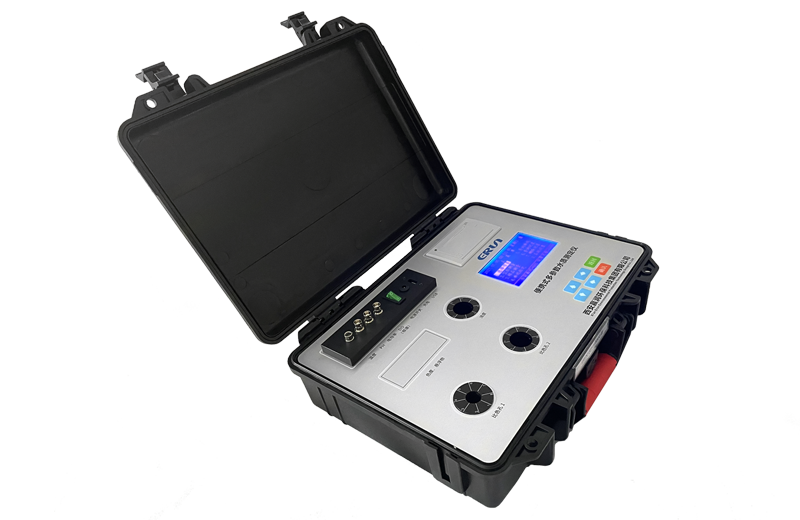
Drinking water disinfection monitoring
Wastewater treatment plants
Food & beverage processing
Aquaculture farms
University and research laboratories
Industrial production water
Environmental inspection teams
Testing ozone in water is essential for safety, compliance, and operational efficiency.
Among all the methods, optical testing and colorimetry provide the most reliable results, and the ERUN-SP7 integrates both, offering a high-precision, portable, multi-parameter solution.
If you need a professional ozone test device that can also measure dozens of other indicators, the ERUN-SP7 is an efficient and cost-effective choice.


