




Chlorine has been used for more than a century as one of the most effective and affordable disinfectants for public water systems. Yet many people still wonder whether it is truly safe to drink tap water that contains chlorine. Understanding how chlorine works, why it is added, and how to accurately measure residual chlorine levels is essential for ensuring water safety in homes, businesses, and industrial facilities.
This article explains everything you need to know about chlorine in drinking water, its potential risks, safe concentration ranges, and how advanced testing tools like the ERUN-SP9 portable multi-parameter water quality tester can support accurate and reliable water quality assessment.
Chlorine is a disinfectant that helps eliminate harmful microorganisms such as bacteria, viruses, and parasites. Municipal water treatment plants add chlorine during the final stages of treatment to ensure water remains safe throughout its journey from the plant to the consumer.
Without chlorine, pathogens can quickly regrow in pipelines. Therefore, a small and controlled amount of residual chlorine is required to protect public health.
Residual chlorine refers to the amount of chlorine that remains in water after the initial disinfection process is completed. This remaining chlorine helps prevent bacterial recontamination within the distribution system.
However, maintaining the right balance is crucial.
Too little chlorine increases the risk of microbial contamination.
Too much chlorine may affect taste, odor, and overall water quality.
Global drinking water standards agree that chlorine is safe to consume within approved limits:
WHO standard: up to 5 mg/L (but most water supplies maintain 0.2–1 mg/L)
EPA standard: maximum residual disinfectant level of 4 mg/L
Most municipal systems: 0.2–1 mg/L at the tap
At these levels, chlorine is considered safe for human consumption.
While safe, chlorine may cause:
A slightly chemical smell
A swimming-pool-like taste
Dryness or irritation for chlorine-sensitive individuals
These effects are aesthetic, not health-related.
Even though regulated levels are safe, certain conditions require attention:
High levels may cause:
Strong odor or unpleasant taste
Skin or eye irritation
User complaints in residential or commercial buildings
Regular monitoring ensures concentrations do not exceed safe thresholds.
If chlorine levels fall too low:
Harmful microorganisms can grow
Biofilm can develop inside pipelines
Waterborne diseases such as E. coli may spread
Therefore, consistent monitoring is essential.
Reliable testing is the only way to confirm whether chlorine levels remain within safety standards. Traditional methods are often limited, time-consuming, or inaccurate under variable field conditions.
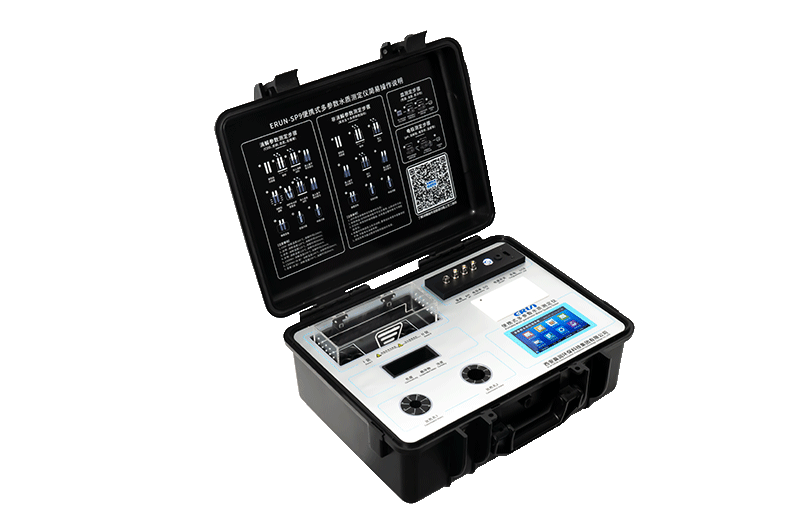
Modern multi-parameter analyzers, such as the ERUN-SP9 Portable Water Quality Tester provide a faster, more precise, and more convenient solution.
The ERUN-SP9 combines advanced optical technology with electrode-based measurement, enabling highly accurate detection of:
Residual chlorine
pH
Conductivity
TDS
Salinity
Dissolved oxygen
Water temperature
And more than 60 additional parameters
1. High Accuracy for Residual Chlorine Testing
Optical technology delivers stable and precise chlorine measurements, even in field environments.
2. Portable, Battery-Powered, and Field-Ready
Its high-capacity lithium battery allows independent outdoor operation without an external power supply, ideal for water utilities, researchers, and inspection teams.
3. Multi-Parameter Capability
Users can freely combine required testing items to meet different application scenarios such as drinking water, groundwater, surface water, and wastewater analysis.
4. Dual Temperature-Controlled Dissolver
Ensures rapid and consistent chemical reactions for high-accuracy analysis.
5. Suitable for a Wide Range of Professional Users
Including environmental monitoring agencies, universities, research institutes, and water treatment facilities.
Most people can safely drink tap water containing chlorine within regulated levels. The real concern is maintaining a balanced and consistent chlorine concentration. This requires regular testing, especially in:
Water treatment plants
Commercial buildings
Industrial facilities
Schools and hospitals
Rural drinking water systems
With an advanced testing tool like the ERUN-SP9, users can ensure chlorine remains within the ideal range.
Chlorine is essential for keeping tap water safe, and drinking water containing regulated levels of chlorine is generally considered safe. However, both high and low chlorine levels can pose risks, making accurate residual chlorine monitoring critical.
The ERUN-SP9 portable multi-parameter water quality tester offers a powerful solution for professionals who require reliable, precise, and efficient chlorine measurement alongside comprehensive water quality analysis.


