




Phenolphthalein alkalinity is a core parameter in water chemistry analysis, yet it is often misunderstood or confused with total alkalinity. For professionals working in boiler systems, drinking water treatment, surface water monitoring, and wastewater analysis, understanding what phenolphthalein alkalinity measures—and why it matters—is essential for accurate water quality control.
In this article, we explain what phenolphthalein alkalinity measures, how it differs from other alkalinity indicators, where it is applied, and how modern laboratory instruments like the ERUN-ST7 multi-parameter water quality tester help achieve precise and repeatable measurements.
Phenolphthalein alkalinity (often called P-alkalinity) refers to the portion of total alkalinity that is caused by hydroxide (OH⁻) ions and half of the carbonate (CO₃²⁻) ions present in water.
It is determined by titrating a water sample with a standard acid until the pH reaches approximately 8.3, the endpoint at which phenolphthalein indicator changes from pink to colorless.
In simple terms, phenolphthalein alkalinity measures:
Strong alkaline components in water
The water’s ability to neutralize acid above pH 8.3
The balance between hydroxide and carbonate alkalinity
This makes it especially useful for industrial and boiler water analysis, where precise alkalinity control is critical.
Phenolphthalein alkalinity specifically measures:
All hydroxide alkalinity (OH⁻)
One-half of the carbonate alkalinity (CO₃²⁻)
It does not measure bicarbonate alkalinity (HCO₃⁻). If the phenolphthalein alkalinity test result is zero, it indicates that no hydroxide or carbonate alkalinity is present—only bicarbonate alkalinity contributes to total alkalinity.
This distinction is crucial for engineers and technicians evaluating chemical dosing, corrosion control, and scale formation risk.
Understanding the relationship between phenolphthalein alkalinity and total alkalinity is key to proper water treatment decisions.
Phenolphthalein alkalinity measures alkalinity up to pH 8.3
Total alkalinity measures alkalinity up to pH 4.5
By comparing the two values, water professionals can calculate the proportions of:
Hydroxide alkalinity
Carbonate alkalinity
Bicarbonate alkalinity
This comparison helps identify whether water is prone to:
Corrosion (low alkalinity balance)
Scale formation (high carbonate levels)
pH instability
Phenolphthalein alkalinity plays a vital role in several practical applications:
In boiler feed water, an incorrect alkalinity balance can lead to:
Caustic embrittlement
Scale buildup
Reduced heat transfer efficiency
Monitoring phenolphthalein alkalinity helps operators maintain safe pH levels and chemical dosing strategies.
While drinking water typically contains little or no hydroxide alkalinity, measuring P-alkalinity helps:
Validate treatment processes
Ensure buffering capacity remains stable
Prevent sudden pH fluctuations
In wastewater and surface water analysis, phenolphthalein alkalinity assists in evaluating:
Biological treatment efficiency
Chemical neutralization processes
Industrial discharge compliance
The classic method involves acid-base titration using phenolphthalein as an indicator. However, modern laboratories increasingly rely on digital water quality analyzers to improve accuracy and repeatability.
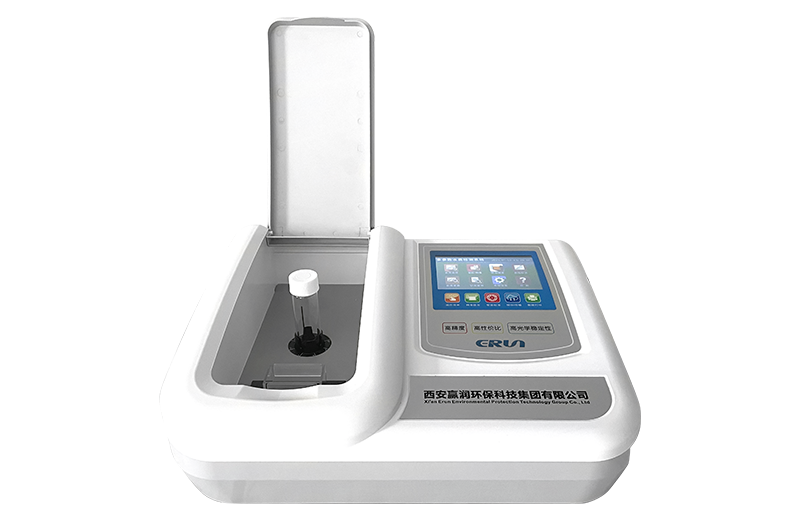
This is where advanced instruments like the ERUN-ST7 desktop multi-parameter water quality tester stand out.
The ERUN-ST7, produced by Erun, is a desktop multi-parameter water quality analysis tester designed for professional laboratory and field use.
Key advantages include:
Supports alkalinity testing, including phenolphthalein alkalinity
Combines optical and electrode methods
Measures pH, conductivity, TDS, dissolved oxygen, and water temperature
High precision with maximum absorbance error of 0.005A
Excellent stability, with absorbance drift below 0.002A in 20 minutes
Reproducibility of ≤2% for reliable data
Thanks to its modular design, users can freely configure test parameters according to their testing needs, making the ERUN-ST7 suitable for drinking water plants, industrial laboratories, and wastewater facilities.
Contact me for more product details:
+8618189135710 (WhatsApp/telephone number)
Email: stella@xayingrun.com
Interpreting phenolphthalein alkalinity values correctly is just as important as measuring them.
P = 0: Only bicarbonate alkalinity present
P < ½ T: Carbonate and bicarbonate alkalinity present
P = ½ T: Only carbonate alkalinity present
P > ½ T: Carbonate and hydroxide alkalinity present
P = T: Only hydroxide alkalinity present
These relationships help engineers fine-tune chemical dosing, lime addition, and corrosion control programs.
So, what does phenolphthalein alkalinity measure? It measures the strong alkaline portion of water, specifically hydroxide ions and part of carbonate ions, providing critical insight into water’s buffering behavior above pH 8.3.
For professionals managing industrial water systems, boilers, laboratories, and municipal treatment plants, phenolphthalein alkalinity is an indispensable parameter for maintaining system stability and water safety.
With precision instruments like the ERUN-ST7 desktop multi-parameter water quality analyzer, accurate alkalinity testing becomes faster, more reliable, and easier to integrate into daily operations.
Visit erunwas.com to learn more about ERUN-ST7 or contact our team to discuss your water testing requirements today.


