




Chlorine is one of the most widely used disinfectants in drinking water, industrial water systems, and wastewater treatment. However, not all chlorine in water exists in the same form. To ensure water safety, system efficiency, and regulatory compliance, it is essential to understand free chlorine vs total chlorine and how to test them accurately.
This guide explains what free chlorine and total chlorine are, how they differ, why both matter, and how modern multi-parameter water quality testers make chlorine monitoring easier and more reliable.
Free chlorine refers to chlorine that is present in water as hypochlorous acid (HOCl) and hypochlorite ion (OCl⁻). These are the most active forms of chlorine and are primarily responsible for killing bacteria, viruses, and other pathogens.
Fast-acting disinfectant
Highly effective against microorganisms
Short-lived in water, especially when organic matter is present
Free chlorine is commonly monitored in:
Drinking water distribution systems
Swimming pools
Food and beverage processing water
Maintaining an appropriate free chlorine level ensures effective disinfection without causing taste, odor, or corrosion issues.
Total chlorine includes:
Free chlorine
Combined chlorine (chloramines formed when chlorine reacts with ammonia or nitrogen compounds)
In simple terms:
Total chlorine = free chlorine + combined chlorine
Combined chlorine is more stable than free chlorine but less effective as a disinfectant. It persists longer in water systems, which is why some utilities intentionally use chloramines.
Municipal water supplies using chloramination
Industrial cooling systems
Wastewater treatment and discharge monitoring
Understanding the differences between free chlorine and total chlorine helps operators choose the right test parameter for their application.
| Aspect | Free Chlorine | Total Chlorine |
Disinfection strength | Very strong | Moderate |
Reaction speed | Fast | Slower |
Stability | Low | High |
Includes chloramines | No | Yes |
Typical use | Pools, drinking water | Distribution systems, industrial water |
In practice, both values are often tested together to assess disinfection efficiency and water chemistry balance.
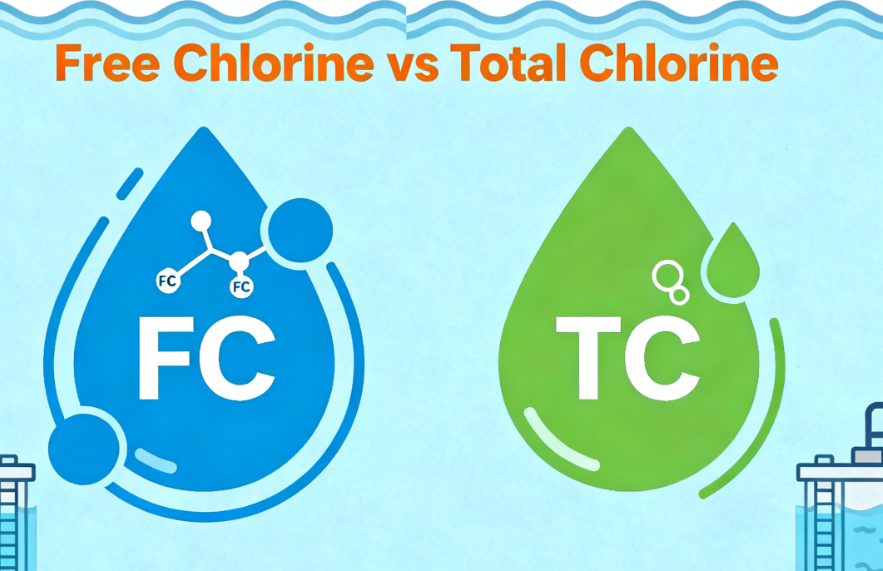
Incorrect chlorine levels can lead to serious problems:
Too low: Risk of microbial contamination
Too high: Pipe corrosion, unpleasant taste, health concerns
Imbalanced free and total chlorine: Inefficient disinfection and chemical waste
Accurate chlorine testing helps:
Meet drinking water regulations
Protect equipment and pipelines
Optimize chemical dosing
Ensure public health safety
This is why many professionals rely on multi-parameter water quality instruments rather than single-function test kits.
Several methods are used to measure chlorine in water:
Most common and widely accepted
Measures free chlorine first, then total chlorine after adding reagents
Suitable for field and laboratory use
Quick and low cost
Lower accuracy
Best for preliminary checks only
High accuracy and repeatability
Reduces human error
Ideal for professional and industrial applications
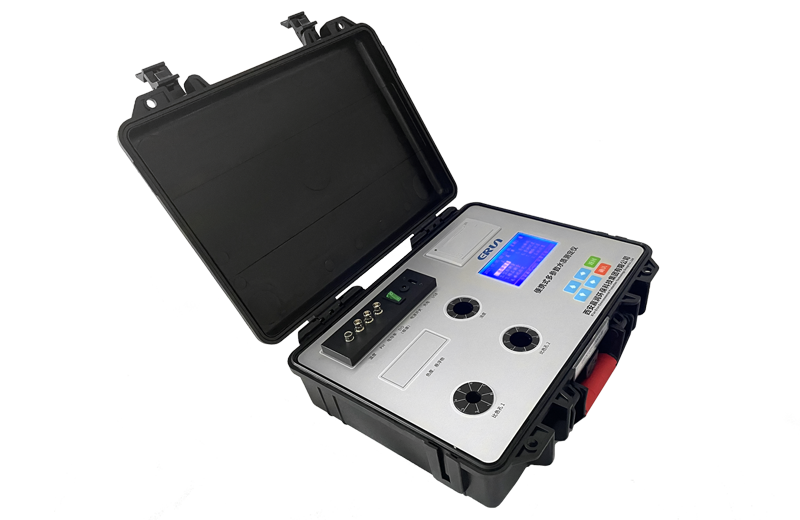
The ERUN-SP7 portable multi-parameter water quality tester is designed for professionals who need reliable chlorine measurements alongside other critical water parameters.
Supports free chlorine and total chlorine testing
Measures over multiple inorganic salts and heavy metals, including:
COD
Ammonia nitrogen
Total phosphorus
Total nitrogen
Turbidity
Copper, iron, manganese, zinc, and more
Expandable and customizable test items
High performance specifications:
Repeatability: ≤3%
Optical stability drift: <0.002A in 20 minutes
Multiple reading modes: concentration, absorbance, transmittance
Whether you are monitoring drinking water, industrial processes, or wastewater discharge, ERUN-SP7 offers flexibility and precision in one portable device.
Contact us today to get detailed specifications or request a quotation:
Email: stella@xayingrun.com
WhatsApp:(+86-18189135710)
The choice depends on your application:
Test free chlorine when:
Evaluating immediate disinfection effectiveness
Monitoring swimming pools or point-of-use water
Test total chlorine when:
Water contains chloramines
Compliance requires residual disinfectant monitoring
Assessing overall chlorine presence in pipelines
In many professional settings, testing both parameters together provides the most accurate picture of water quality.
Understanding what free chlorine and total chlorine mean is essential for effective water quality management. Free chlorine ensures rapid disinfection, while total chlorine reflects long-term residual control. Both indicators play a critical role in water safety, regulatory compliance, and system efficiency.
Using a professional instrument like the ERUN-SP7 portable multi-parameter water quality tester allows you to monitor chlorine accurately while analyzing a wide range of water quality parameters in one device.
If you are looking for a reliable and expandable solution for chlorine testing, ERUN-SP7 provides the accuracy, flexibility, and efficiency required for modern water analysis.


