




Phosphate control plays a critical role in boiler water treatment. Whether you operate industrial boilers, power plant systems, or commercial steam equipment, knowing how to check phosphate in boiler water correctly can help prevent scaling, corrosion, and costly downtime. In this guide, we explain what phosphate is, why it matters, common testing methods, and how modern portable instruments like the ERUN-SP7 multi-parameter water quality tester simplify phosphate monitoring.
Boiler water operates under high temperature and pressure. Even small imbalances in chemical parameters can lead to serious operational problems. Phosphate is intentionally added to boiler systems as part of chemical treatment, but its concentration must be carefully controlled.
If phosphate levels are not measured regularly, boilers may suffer from scale formation, corrosion, foaming, or carryover. These issues directly impact heat transfer efficiency, fuel consumption, and equipment lifespan. That is why accurate and routine phosphate testing in boiler water is essential for stable and efficient operation.
Therefore, regular and accurate phosphate testing is an indispensable part of maintaining stable and efficient boiler operation.
Phosphates are commonly used in boiler water treatment programs to react with calcium and magnesium hardness. By forming soft, non-adherent sludge instead of hard scale, phosphate helps protect boiler tubes and heat exchange surfaces.
This controlled reaction allows impurities to be removed through blowdown rather than depositing on metal surfaces, which would otherwise reduce thermal efficiency.
The key is to maintain its concentration within the target range through continuous monitoring, ensuring both effective scale prevention and avoiding secondary problems.
Acceptable phosphate levels depend on boiler pressure, design, and treatment strategy. While specific control ranges vary, maintaining phosphate within a defined window is critical. Continuous monitoring ensures phosphates remain effective without creating secondary problems such as sludge buildup or foaming.
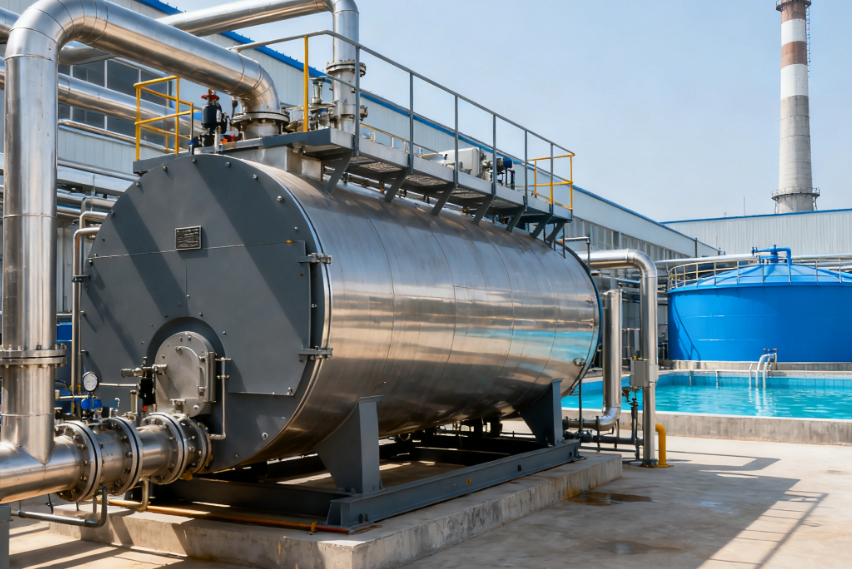
Insufficient phosphate means hardness ions are not properly controlled. This can result in scale formation on boiler tubes, reduced heat transfer, overheating of metal surfaces, and long-term corrosion damage.
Excessive phosphate is equally problematic. High phosphate concentrations may cause foaming, increased total dissolved solids (TDS), and carryover of boiler water into steam lines. Over time, this leads to fouling of downstream equipment and unstable boiler operation.
Accurate phosphate testing requires choosing the right method for your operational needs.
Traditional colorimetric test kits are still widely used. They rely on reagent reactions and visual color comparison. While inexpensive, these methods are prone to human error, limited accuracy, and poor repeatability—especially in industrial environments where precision matters.
Laboratory analysis offers high accuracy but involves sample transport, delayed results, and higher costs. For boilers that require frequent adjustments, laboratory testing is often too slow to support real-time decision-making.
Portable digital water quality testers provide fast, reliable, and repeatable phosphate measurements on site. These instruments reduce operator error, improve data consistency, and allow immediate corrective action—making them ideal for boiler water management.
Phosphate does not act alone. Effective boiler water control also depends on monitoring parameters such as total phosphorus, hardness, COD, ammonia nitrogen, residual chlorine, sulfate, and nitrite. Testing multiple parameters together provides a more complete picture of boiler water chemistry.
Using separate instruments for each parameter increases costs and complexity. A multi-parameter water quality tester allows operators to conduct comprehensive analysis with a single device, improving efficiency while reducing equipment investment and training requirements.
Therefore, testing a single parameter is no longer sufficient to comprehensively assess the chemical state of boiler water. Only a multi-parameter analysis can provide a truly complete "water quality profile," laying the foundation for precise control.
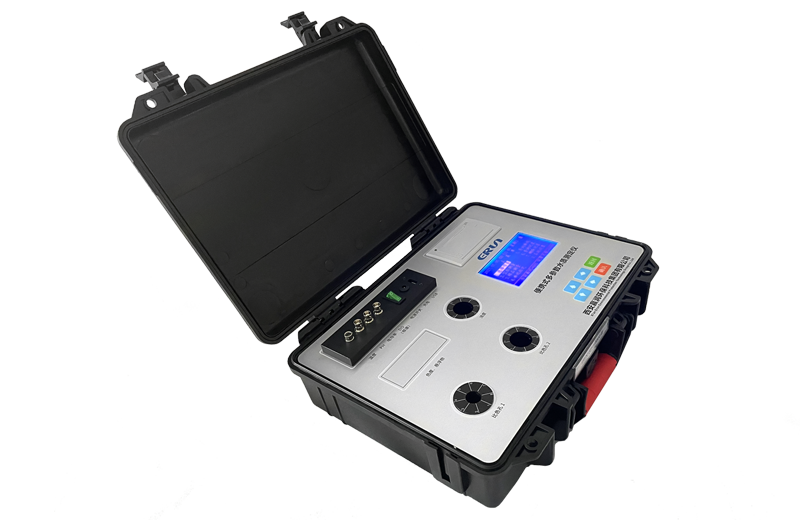
The ERUN-SP7, developed by Erun, is a portable multi-parameter water quality tester designed for industrial and environmental applications. It is well-suited for boiler water testing, offering flexibility, accuracy, and on-site convenience.
The ERUN-SP7 supports a wide range of parameters relevant to boiler systems, including phosphate, total phosphorus, COD, ammonia nitrogen, total nitrogen, hardness, sulfate, nitrite, residual chlorine, total chlorine, turbidity, and various metal ions. Test items can be expanded and customized based on user requirements.
The instrument offers strong performance indicators for industrial use. It delivers repeatability within 3%, ensuring consistent results. Optical stability is high, with absorbance drift less than 0.002A in 20 minutes, supporting reliable testing in field conditions. Multiple reading modes—concentration, absorbance, and transmittance—provide flexibility for different analytical needs.
Contact us today to get detailed specifications or request a quotation:
Email: stella@xayingrun.com
WhatsApp:(+86-18189135710)
For boiler applications, accuracy alone is not enough. Stability and repeatability are essential to ensure reliable trend analysis and long-term process control.
Boiler systems vary in size and complexity. Choosing a portable, expandable tester allows facilities to adapt testing programs as operational needs change, without replacing equipment.
Phosphate monitoring is a fundamental part of boiler water treatment. Understanding how to check phosphate in boiler water—and selecting the right testing method—helps prevent scaling, corrosion, and operational instability. Modern portable instruments like the ERUN-SP7 multi-parameter water quality tester provide an efficient, accurate, and scalable solution for industrial boiler systems. For facilities seeking reliable boiler water testing equipment, ERUN-SP7 offers a practical choice backed by strong performance and flexibility.
Get a Free Quote + Technical Consultation Today!
Email: stella@xayingrun.com | WhatsApp: +86-18189135710


