




Water hardness is often overlooked compared to parameters like pH or residual chlorine, yet it plays a decisive role in water system stability, equipment lifespan, and biological health. Understanding the significance of water hardness helps operators, engineers, and water managers prevent hidden risks such as scaling, corrosion, and inefficient treatment processes. Whether in industrial circulation systems, drinking water supply, or aquaculture, hardness control begins with accurate measurement.
Water hardness refers to the concentration of dissolved minerals—primarily calcium (Ca²⁺) and magnesium (Mg²⁺)—in water. It is commonly expressed as mg/L or ppm as calcium carbonate (CaCO₃).
Hardness is typically divided into two types:
Temporary hardness, caused by bicarbonates, can be reduced by boiling or lime treatment
Permanent hardness, caused by sulfates and chlorides, requires chemical or physical treatment
Understanding this distinction is essential because different hardness types affect scaling potential, chemical dosing strategies, and treatment efficiency in different ways.
In industrial applications, especially boilers, cooling towers, and circulating water systems, improper hardness levels can cause serious operational problems. Hard water promotes scale formation on heat exchange surfaces, reducing thermal efficiency and increasing energy consumption. Over time, this leads to higher maintenance costs and unplanned shutdowns.
Conversely, water that is too soft can be corrosive, accelerating metal loss in pipelines and equipment. Monitoring hardness alongside parameters such as residual chlorine, iron, and turbidity allows operators to maintain balanced water chemistry and protect assets.
For drinking water systems, hardness affects taste, pipe durability, and overall water stability. While moderately hard water is generally safe and acceptable, excessively hard water increases scaling in distribution networks and household appliances.
Municipal water plants need consistent hardness monitoring to balance consumer comfort with infrastructure protection. Hardness data also helps optimize disinfectant dosing, preventing overuse while maintaining microbial safety.
In aquaculture, water hardness directly influences fish health, osmoregulation, and nutrient absorption. Different species thrive in different hardness ranges, and sudden changes can cause stress or disease.
Hardness also affects the toxicity of ammonia nitrogen and heavy metals, meaning inaccurate hardness control can amplify other water quality risks. Regular hardness monitoring is therefore essential for stable pond and recirculating aquaculture systems.

Scale buildup in pipes and heat exchangers
Reduced water flow and heat transfer efficiency
Higher chemical and energy consumption
Increased downtime and maintenance frequency
Accelerated corrosion of metal pipes
Leaching of metals into water
Increased risk of system leaks
Both extremes highlight why continuous hardness monitoring—not occasional testing—is critical for long-term water management.
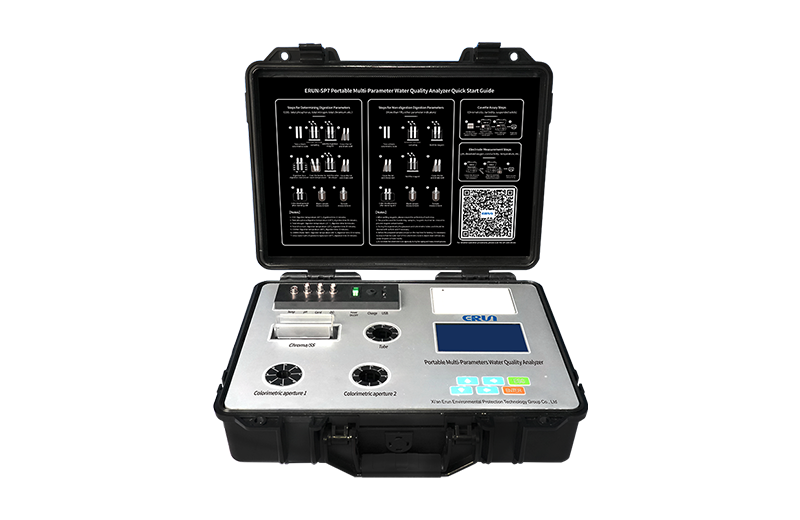
The ERUN-SP7 portable multi-parameter water quality detector is designed to solve real-world water testing challenges faced by industrial operators, municipal utilities, and aquaculture managers.
Instead of measuring hardness in isolation, ERUN-SP7 allows users to test hardness together with residual chlorine, total chlorine, ammonia nitrogen, turbidity, iron, manganese, phosphate, sulfate, and more. This integrated approach helps customers:
Identify the root cause of scaling or corrosion
Adjust chemical dosing with confidence
Respond quickly to on-site water quality changes
Its portable design makes it ideal for field testing, emergency inspections, and routine monitoring, eliminating delays associated with laboratory analysis.
Testing frequency depends on application:
Industrial circulating water: daily or continuous monitoring
Municipal water systems: weekly to monthly, depending on source variability
Aquaculture systems: at least weekly, or after water changes
Seasonal changes, rainfall, and source-water fluctuations can all affect hardness, making regular monitoring essential for proactive control.
The significance of water hardness extends far beyond simple mineral content. It influences system efficiency, equipment protection, water safety, and biological health across multiple industries. By combining hardness testing with comprehensive water quality analysis, operators can prevent problems instead of reacting to them.
Tools like the ERUN-SP7 empower users with fast, accurate, on-site data—helping transform water hardness monitoring into a reliable decision-making process rather than a guessing game.


