




Maintaining proper free chlorine levels in swimming pools is essential for protecting swimmer health, ensuring effective disinfection, and keeping pool water clear and odor-free. Free chlorine is the most active and effective form of chlorine used to eliminate bacteria, viruses, and algae. When free chlorine levels fall outside the recommended range, water quality and user safety can be compromised.
This article explains what free chlorine is, the recommended free chlorine levels for swimming pools according to Chinese national standards, why accurate testing matters, and how to measure free chlorine reliably using modern testing methods and portable instruments.
Free chlorine refers to chlorine that is available in water to actively disinfect contaminants. It mainly exists as hypochlorous acid (HOCl) and hypochlorite ion (OCl⁻), which are highly effective at killing microorganisms.
Unlike combined chlorine (chloramines), free chlorine does not produce strong odors or irritation when maintained at proper levels. For this reason, free chlorine concentration is the primary indicator used in swimming pool water quality monitoring.
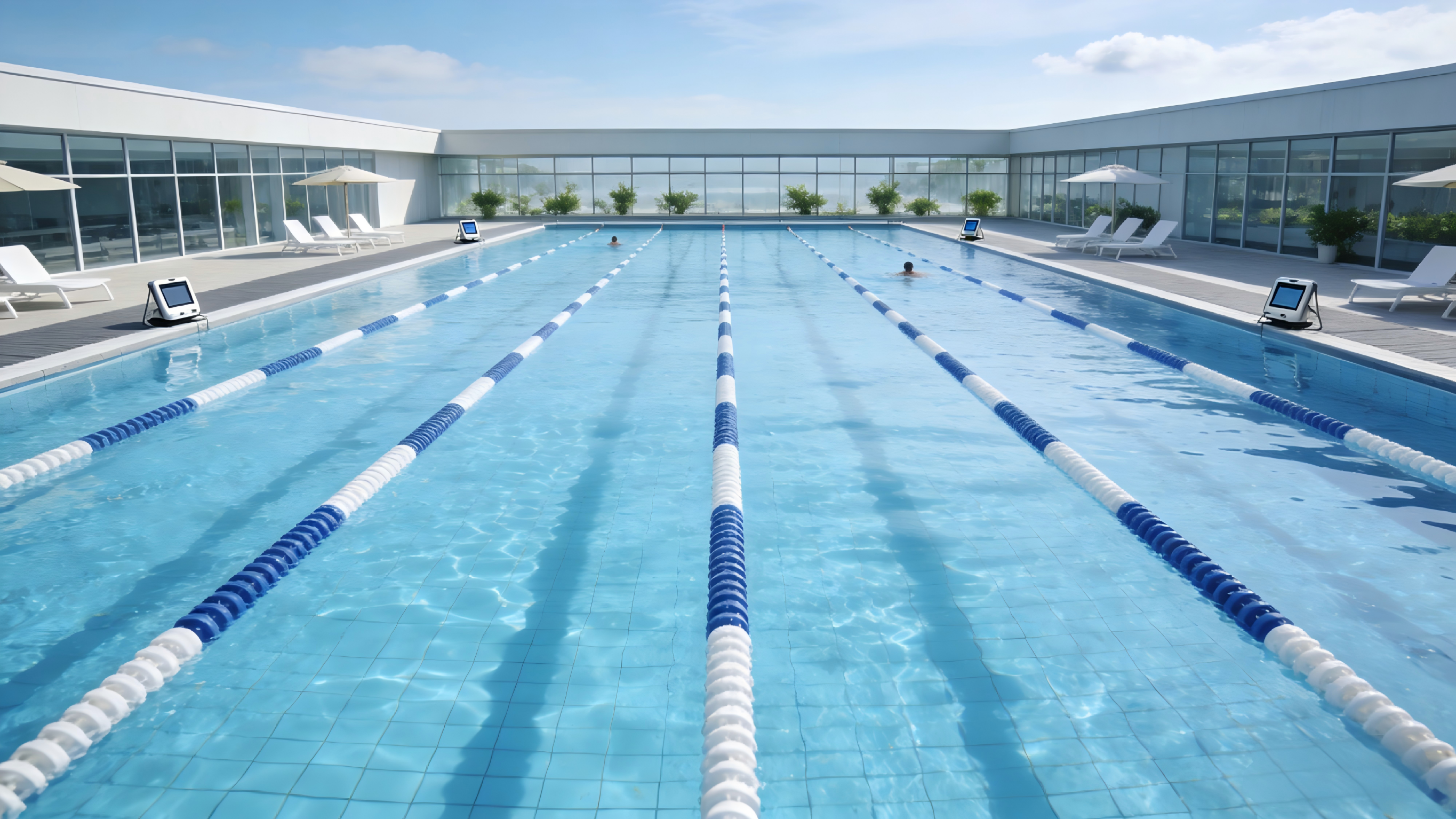
Swimming pool water quality is regulated by national hygiene standards. According to GB9667-1996 (Hygienic Standard for Swimming Places), the free residual chlorine in swimming pool water should generally be maintained within 0.3–0.5 mg/L to meet basic disinfection requirements.
In practical operation, updated regional guidelines and public health management practices based on GB37488-2019 indicate that when chlorine disinfection is applied in artificial swimming pools, free chlorine is typically controlled within 0.3–1.0 mg/L, with adjustments made according to bather load, water temperature, and pool usage frequency.
Maintaining free chlorine within these ranges ensures effective pathogen inactivation while minimizing swimmer discomfort such as skin irritation, eye stinging, and strong chlorine odors caused by excessive chlorine residuals. Regular testing and timely adjustment are essential to keeping swimming pool water safe and comfortable.
Maintaining correct swimming pool chlorine levels is critical for several reasons:
Effective disinfection: Free chlorine rapidly inactivates bacteria, viruses, and pathogens that cause recreational water illnesses.
Clear and stable water quality: Adequate chlorine prevents algae growth and organic contamination, keeping pool water visually clean.
Reduced chloramine formation: Insufficient free chlorine promotes chloramine formation, leading to unpleasant odors and eye irritation.
Regulatory compliance: Public swimming pools must meet required chlorine limits to comply with health regulations and remain operational.
Accurate free chlorine testing is essential for daily pool maintenance. Several testing methods are commonly used.
The DPD colorimetric method is the most widely accepted technique for measuring free chlorine. When DPD reagent reacts with free chlorine, the water sample turns pink, and the color intensity corresponds to chlorine concentration.
Advantages include:
High accuracy and repeatability
Suitable for swimming pools, spas, and drinking water
Compatible with portable and laboratory instruments
Test strips provide quick and low-cost chlorine estimation, but their accuracy is limited. They are best suited for residential pools rather than public facilities.
Portable photometric testers offer precise digital readings and are widely used in public swimming pools and professional water quality monitoring.
For operators requiring accurate and rapid free chlorine testing, especially in public swimming pools and on-site inspections, a portable residual chlorine water quality meter provides the most reliable solution.
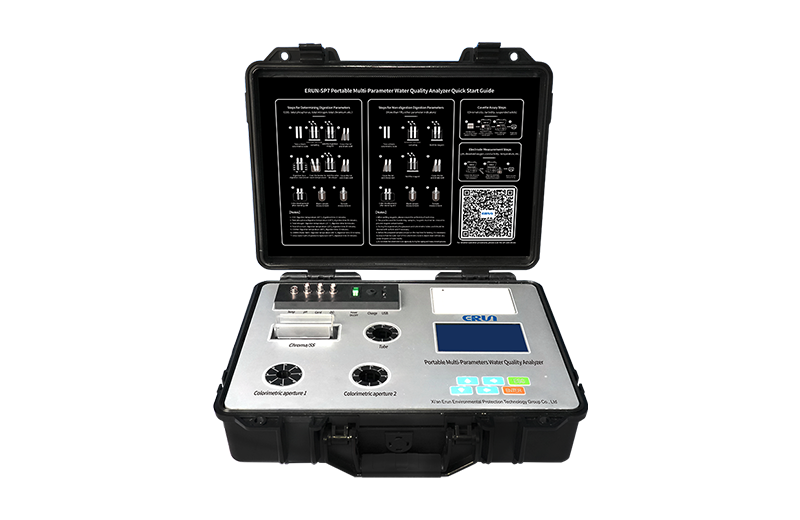
The ERUN-SP7-K6 Portable Residual Chlorine Water Quality Tester, developed by ERUN Environmental Protection, is designed for precise residual and free chlorine measurement using the DPD colorimetric method, compliant with standard water quality testing procedures.
1. Measures residual and free chlorine using the DPD method
2. Measurement range of 0.02–10.00 mg/L, suitable for pool applications
3. High accuracy of ±0.01 mg/L for reliable chlorine monitoring
4. Large LCD display with automatic wavelength selection and one-click recovery
5. Supports data storage and report printing
6. ABS enclosure with IP65 protection, waterproof and corrosion-resistant
7. Low power consumption (<10 W) with standby time up to six months
Built for demanding environments, the ERUN-SP7-K6 is widely used in swimming pools and water parks, as well as municipal water supply systems, food and beverage facilities, and medical and pharmaceutical industries.
Several factors influence free chlorine consumption in swimming pools:
Sunlight exposure: UV radiation accelerates chlorine degradation
Bather load: Sweat and organic matter increase chlorine demand
Water temperature: Higher temperatures speed up chlorine decay
pH levels: Free chlorine is most effective at pH 7.2–7.6
Regular monitoring and balanced water chemistry help maintain stable free chlorine levels.
To maintain recommended free chlorine levels in swimming pools:
l Test free chlorine daily in public pools
l Adjust chlorine dosage based on usage and environmental conditions
l Maintain proper pH to maximize disinfection efficiency
l Use reliable portable chlorine testers for consistent results
Maintaining proper free chlorine levels in swimming pools is essential for water safety, regulatory compliance, and swimmer comfort. By following national standard chlorine ranges and using accurate testing methods such as the DPD colorimetric technique, pool operators can ensure effective disinfection and long-term water quality stability. Reliable portable instruments like the ERUN-SP7-K6 provide a practical and precise solution for routine swimming pool chlorine monitoring.


