




Introduction: Why Early Condenser Leakage Detection Matters
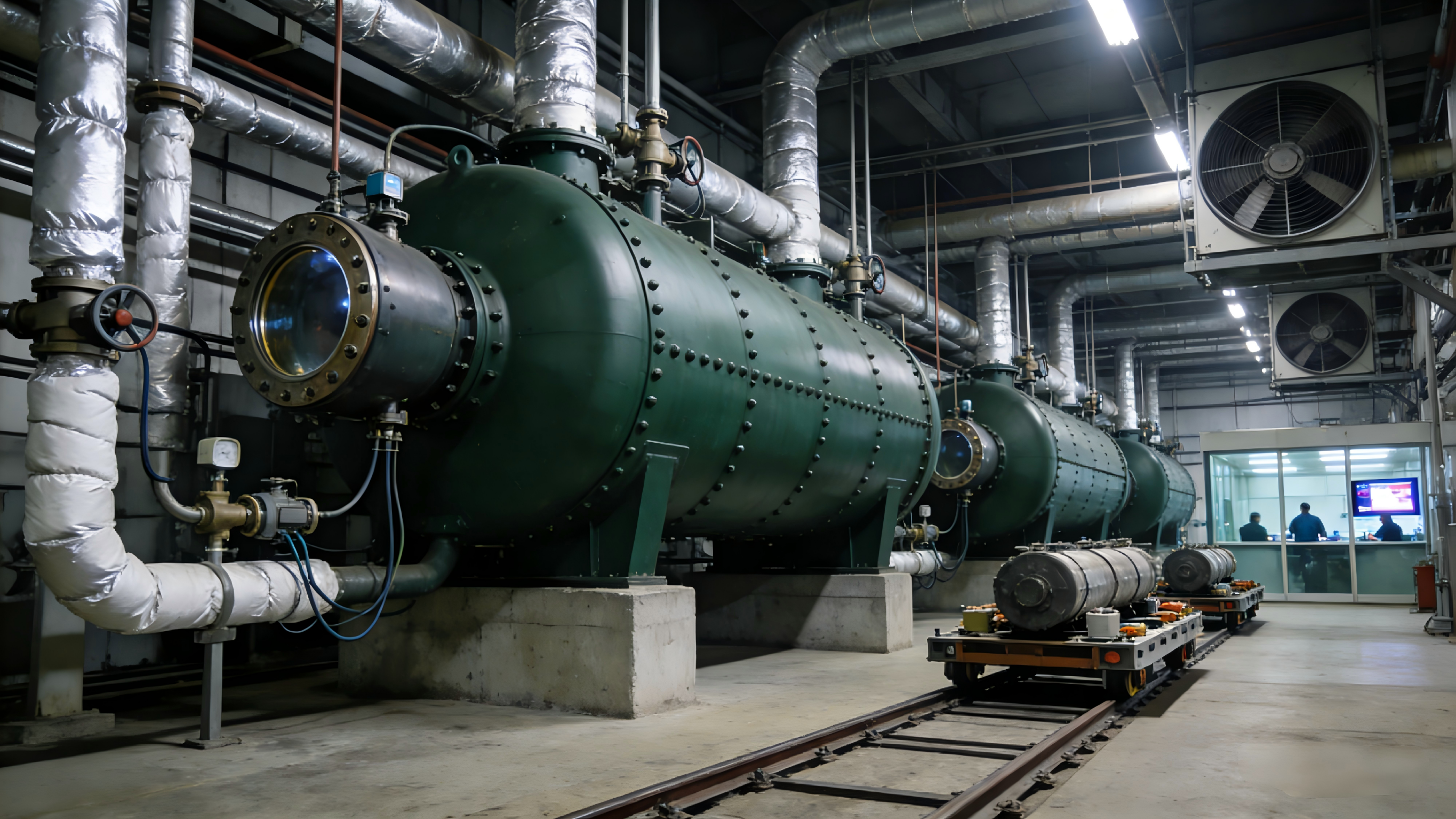
In power plants and industrial boiler systems, the condenser plays a critical role in maintaining thermal efficiency and water quality. Even a minor condenser leakage can allow cooling water to enter the condensate system, introducing dissolved salts that threaten boiler water chemistry and system safety. If not detected early, these contaminants can cause scaling, corrosion, turbine fouling, and unplanned shutdowns.
Traditional boiler water monitoring indicators often fail to detect leakage at an early stage. This is why sodium ion monitoring has become one of the most reliable methods for early condenser leakage detection. Due to its high sensitivity and fast response, sodium ion analysis provides operators with a powerful early-warning signal before serious damage occurs.
Condenser leakage occurs when cooling water penetrates damaged or corroded condenser tubes and mixes with high-purity condensate. Cooling water—especially seawater or circulating water—contains significantly higher levels of sodium ion compared to boiler-grade water.
At the early stage, leakage volumes are extremely small. Parameters such as conductivity, chloride, or silica may not change noticeably, making traditional water quality monitoring methods insufficient. However, sodium ion concentration responds rapidly, even at trace contamination levels, making it ideal for early detection.
Under normal operating conditions, sodium ion concentration in boiler water and condensate remains extremely low, often at the ppb level. Any sudden increase typically indicates contamination from an external source, most commonly condenser tube leakage.
Unlike conductivity monitoring, which reflects total ionic content, sodium ion monitoring focuses on a single, highly indicative contaminant. This allows operators to detect condenser leakage earlier and with greater accuracy, even when other parameters appear stable.
Early detection strategies often combine online sodium ion monitoring with laboratory sodium ion analysis. While online analyzers provide real-time alerts, benchtop sodium ion analyzers offer high-precision verification and troubleshooting.
1. Establish baseline sodium ion levels during normal operation
2. Monitor abnormal upward trends in sodium ion concentration
3. Confirm results through laboratory sodium ion testing
4. Identify and isolate leakage sources before boiler system damage occurs
This approach allows maintenance teams to intervene early, reducing repair costs and preventing long-term equipment degradation.
Conductivity analysis can be affected by temperature fluctuations, dissolved gases, and treatment chemicals. Sodium ion concentration, however, directly reflects contamination from cooling water and offers higher sensitivity for early condenser leakage detection.
Chloride and silica monitoring are useful indicators, but their response is often slower. Sodium ion typically shows abnormal changes first, making it the preferred early-warning parameter in power plant water chemistry.
Sodium ion monitoring is widely applied in:
High-pressure boiler systems
Power plant condensate systems
Industrial steam generation
Differentiating between ion-exchange resin failure and condenser leakage
Accurate sodium ion analysis supports safer operation, improved efficiency, and better decision-making for maintenance planning.
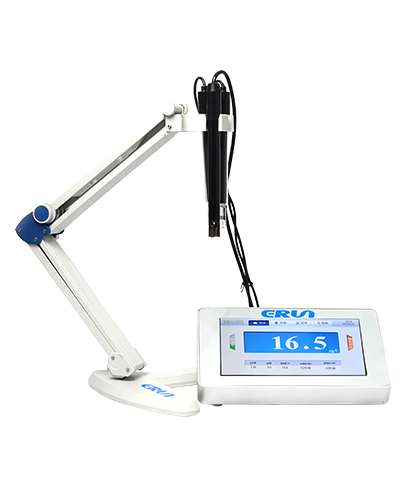
For precise laboratory sodium ion measurement, Erun’s ERUN-ST3-M6 Power Plant Benchtop Water Quality Sodium Ion Analyzer delivers exceptional accuracy and stability.
Designed specifically for power plant water quality monitoring, the ERUN-ST3-M6 sodium ion analyzer features ppb-level sodium ion measurement using high-precision laboratory electrodes. Compared with traditional pointer-type sodium meters, it offers significantly improved performance in static beaker measurement.
Key advantages include:
Key Advantage | Description |
High-resolution & wide measurement range | Resolution up to 0.01 μg/L, with dual ranges 0–100 μg/L and 0–10 mg/L |
Color LCD touch screen | Full-color touchscreen provides intuitive and user-friendly operation |
Multi-parameter display | Simultaneous real-time display of sodium ion concentration, pH, and temperature |
Advanced calibration method | Two-point calibration with background sodium correction for improved accuracy |
Intelligent signal processing | ARM processor enables automatic temperature compensation and slope calculation |
Dynamic measurement mode (optional) | Optional dynamic measurement mode enhances measurement precision |
Anti-interference power design | Isolated power supply effectively minimizes external electrical interference |
The ERUN-ST3-M6 sodium ion analyzer is widely used in thermal power plants, chemical processing, metallurgy, environmental monitoring, pharmaceuticals, food production, and tap water analysis.
Early condenser leakage detection is essential for protecting boiler systems and maintaining safe, efficient plant operation. Sodium ion monitoring remains one of the most sensitive and reliable indicators available. By combining online monitoring with accurate laboratory sodium ion analysis using advanced benchtop instruments like the ERUN-ST3-M6, power plants can detect leakage earlier, reduce maintenance risks, and ensure long-term operational reliability.


