




Groundwater arsenic pollution has become a critical global water safety issue, affecting millions of people who rely on wells and aquifers for drinking water. Arsenic is a naturally occurring metalloid, but when present in drinking water above safe limits, it poses serious long-term health risks. International organizations such as the World Health Organization (WHO) and regulatory frameworks like the U.S. Safe Drinking Water Act (SDWA) have established strict standards to control arsenic levels in drinking water. Understanding where arsenic comes from, how it affects human health, and how it can be accurately detected is essential for effective water quality management and public health protection.
Arsenic exposure through drinking water is primarily associated with chronic health effects rather than immediate symptoms. According to the WHO Guidelines for Drinking-water Quality, the recommended guideline value for arsenic is 10 µg/L (0.01 mg/L), a threshold also adopted by the U.S. Environmental Protection Agency under the SDWA. Long-term consumption of water exceeding this limit has been linked to skin lesions, hyperpigmentation, cardiovascular disease, diabetes, and various cancers, including skin, lung, bladder, and kidney cancer.
Arsenic interferes with cellular respiration and enzyme activity, leading to cumulative toxicity over time. Because arsenic is colorless, tasteless, and odorless in water, affected communities often remain unaware of contamination until health problems become evident. This hidden nature makes routine monitoring especially important in regions dependent on groundwater sources.

Groundwater arsenic contamination originates from both natural and human-related processes. In many regions, especially South and Southeast Asia, arsenic is released into groundwater through geochemical reactions between aquifer sediments and water. Reductive dissolution of iron oxides, a common process in anoxic aquifers, can mobilize arsenic into groundwater.
Human activities can further intensify arsenic pollution. Mining, smelting, coal combustion, pesticide use, and improper disposal of industrial waste may introduce arsenic into soil and groundwater systems. Agricultural irrigation using contaminated water can also redistribute arsenic across larger areas, increasing the risk of human exposure through both drinking water and food crops.
Typical sources of groundwater arsenic include:
Source Type | Description |
Natural geological sources | Weathering of arsenic-rich rocks and sediments |
Mining and smelting | Release of arsenic-containing waste into soil and water |
Industrial activities | Chemical manufacturing, glass production, electronics |
Agricultural inputs | Historical use of arsenic-based pesticides and herbicides |
The Safe Drinking Water Act (SDWA) mandates public water systems in the United States to comply with a maximum contaminant level (MCL) of 0.01 mg/L for arsenic, supported by continuous monitoring and reporting requirements. Similarly, the WHO guideline serves as a global reference point for countries developing national drinking water standards.
While these standards significantly reduce health risks, private wells and rural groundwater sources often fall outside centralized regulatory oversight. This gap highlights the importance of accessible, reliable field testing methods that enable rapid decision-making and early intervention.
Accurate detection of arsenic is the foundation of effective risk control. Laboratory-based methods such as atomic absorption spectrometry (AAS) and inductively coupled plasma mass spectrometry (ICP-MS) offer high accuracy but require specialized facilities, trained personnel, and longer turnaround times.
For on-site and rapid assessments, portable arsenic detection technologies are increasingly valued. One effective approach is anodic stripping voltammetry, a method known for its high sensitivity and low detection limits. This technique enables field professionals to measure arsenic concentrations directly at sampling locations, reducing delays and supporting immediate corrective actions.
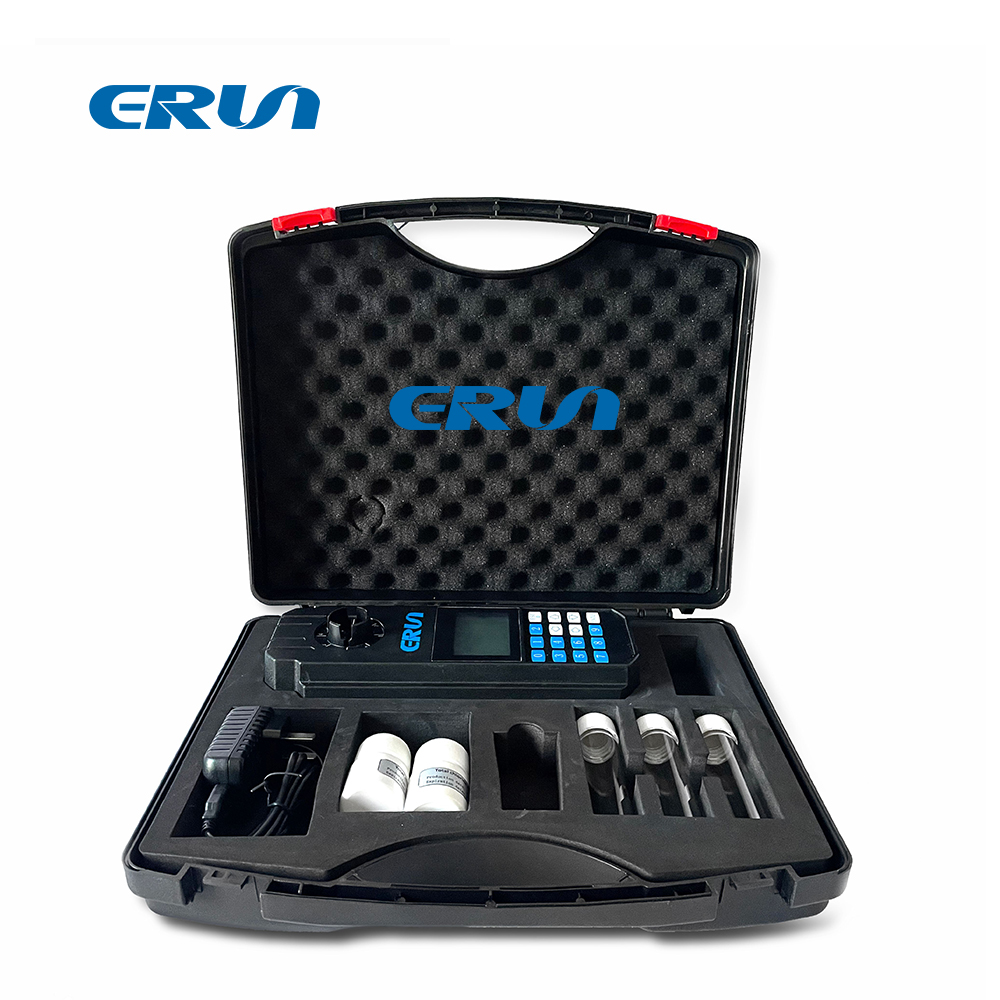
The ERUN-SP5-F6 Portable Arsenic Tester developed by ERUN Environmental Protection, is designed specifically for this purpose. With a measuring range of 0.004–0.500 mg/L and an indication error of ±5% or less, it delivers laboratory-level accuracy in a compact, field-ready device. Its lightweight design, large LCD display, and IP65-rated ABS housing make it suitable for environmental monitoring, emergency investigations, and scientific research.
The instrument’s ability to store standard curves and historical measurement data allows users to track pollution trends over time, supporting source identification and long-term groundwater management. Compared with traditional laboratory testing, portable detection significantly improves response speed and cost efficiency, especially in remote or high-risk areas.
Groundwater arsenic pollution remains a complex challenge shaped by geology, human activity, and infrastructure limitations. Effective protection of drinking water supplies depends on combining regulatory standards with practical monitoring tools that work beyond the laboratory. By aligning routine testing with WHO and SDWA guidelines and deploying reliable field instruments like the ERUN-SP5-F6, water managers and environmental professionals can identify risks earlier, protect vulnerable populations, and support sustainable groundwater use with greater confidence.


