




Understanding phosphate in wastewater is essential for both environmental protection and industrial water management. Phosphate is a common pollutant in industrial effluent and municipal discharge, and when not properly monitored, it can cause serious ecological damage, operational inefficiencies, and compliance risks.
This article explains what phosphate in wastewater is, where it comes from, why it must be controlled, and how accurate monitoring solutions help industries and wastewater treatment plants manage phosphate levels effectively.
Phosphate in wastewater refers to phosphorus compounds—primarily orthophosphates—that are present in discharged water. These compounds are water-soluble and highly reactive, making them easy to spread through natural water systems.
In industrial settings, phosphate is often intentionally added to boiler water as a corrosion inhibitor or scale control agent. In wastewater treatment contexts, phosphate appears as a residual pollutant that must be carefully measured and controlled to meet discharge standards.
Because phosphate directly affects both environmental safety and treatment system performance, phosphate in wastewater is considered a critical water quality indicator.
Phosphate enters wastewater from multiple sources, depending on the application.
Thermal power plants, chemical processing facilities, and manufacturing plants use phosphate-based chemicals in boilers and cooling systems. Once discharged, these compounds contribute to elevated phosphate levels in effluent streams.
Detergents, cleaning agents, and organic waste are major contributors to phosphate loads in municipal wastewater systems.
Boiler water requires precise phosphate dosing for corrosion control, while wastewater treatment plants focus on removing phosphate before discharge. This difference explains why accurate monitoring is critical across both environments.
Excessive phosphate discharge leads to eutrophication in natural water bodies. This process accelerates algae growth, reduces dissolved oxygen, and damages aquatic ecosystems.
From an operational perspective, uncontrolled phosphate levels can reduce treatment efficiency, increase chemical consumption, and lead to non-compliance with environmental regulations. Many regions impose strict limits on phosphate discharge, making phosphate in wastewater treatment a regulatory priority.
For plant operators, the challenge is balancing effective phosphate control without over-treatment or excessive manual testing costs.

Phosphate is typically measured using colorimetric analysis, which detects phosphate concentration through chemical reactions that produce measurable color changes.
Manual testing methods require frequent sampling, reagent handling, and operator expertise. While suitable for low-frequency checks, they increase the risk of inconsistency and delayed response.
Automated systems enable continuous or routine monitoring with higher accuracy and stability. For facilities requiring reliable data, wastewater phosphate monitoring increasingly depends on dedicated analyzers rather than manual testing kits.
Measuring phosphate accurately over time presents several challenges.
Manual sampling can introduce contamination and operator error. In addition, traditional instruments may suffer from light source drift, reagent instability, and inconsistent cleaning, all of which affect long-term accuracy.
In boiler water and wastewater environments, where phosphate concentrations must be tightly controlled, these issues make consistent phosphate water quality testing difficult without automation.
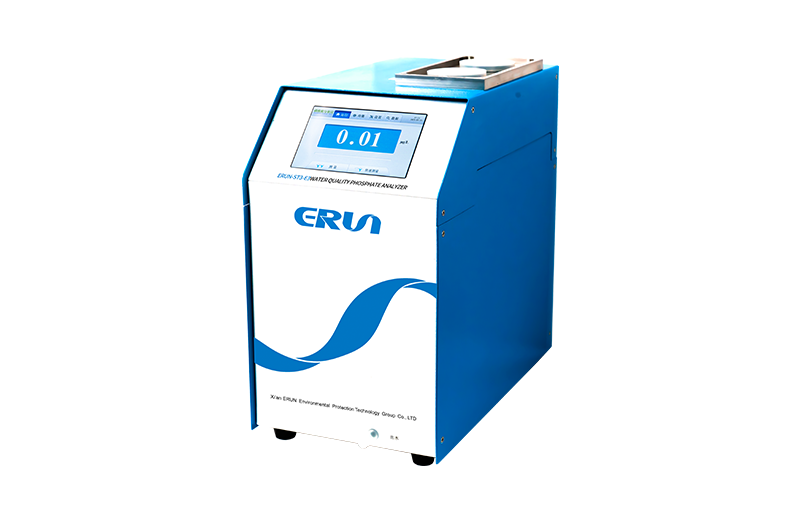
The ERUN-ST3-E3 water quality phosphate analyzer is designed to meet the real-world needs of power plants and wastewater treatment facilities.
Its one-click, fully automated operation eliminates manual intervention, ensuring consistent and repeatable phosphate measurements. Automatic cleaning after each measurement prevents residue buildup and reduces maintenance workload—an important advantage for facilities running continuous processes.
The analyzer uses dual-beam photoelectric detection, which compensates for light source drift and delivers long-term stability and high accuracy. By simultaneously measuring reference and colorimetric solutions, it minimizes measurement deviations and improves data reliability.
For customers, this means fewer false readings, faster response to phosphate fluctuations, and better control of treatment processes. The fast measurement mode further supports high-frequency monitoring, helping operators react before phosphate levels reach critical limits.
So, what is phosphate in wastewater? It is a key pollutant and process indicator that affects environmental safety, regulatory compliance, and industrial system performance.
Accurate phosphate monitoring is essential—not only to meet standards, but to maintain stable operations. With an automated solution like ERUN-ST3-E3, facilities can reduce manual workload, improve data accuracy, and manage phosphate levels with confidence.


