




Safe drinking water depends on effective disinfection. One of the most important indicators of disinfection performance is what is residual chlorine in drinking water. Residual chlorine plays a critical role in ensuring water remains safe not only at the treatment plant but throughout the entire distribution network. Understanding what residual chlorine is, why it matters, and how it is monitored helps water utilities, engineers, and facility managers maintain compliance and protect public health.
Residual chlorine in drinking water refers to the amount of chlorine that remains in the water after the initial disinfection process is complete. This remaining chlorine continues to disinfect the water as it travels through pipelines, storage tanks, and distribution systems.
There are two main forms of residual chlorine. Free residual chlorine consists mainly of hypochlorous acid and hypochlorite ions, which are highly effective at killing microorganisms. Combined residual chlorine is formed when chlorine reacts with ammonia or nitrogen compounds to create chloramines, which are more stable but act more slowly.
The presence of residual chlorine ensures that drinking water stays protected from microbial recontamination long after it leaves the treatment plant.
Residual chlorine is essential because water systems are not sterile environments. Pipes, storage reservoirs, and pressure fluctuations can introduce contaminants. Maintaining residual chlorine in drinking water provides a continuous barrier against harmful bacteria and pathogens.
If residual chlorine levels are too low, microorganisms can regrow inside the distribution network, increasing health risks. If levels are too high, consumers may experience unpleasant taste and odor issues, and long-term infrastructure corrosion may occur. Proper control of residual chlorine ensures both safety and water quality stability.
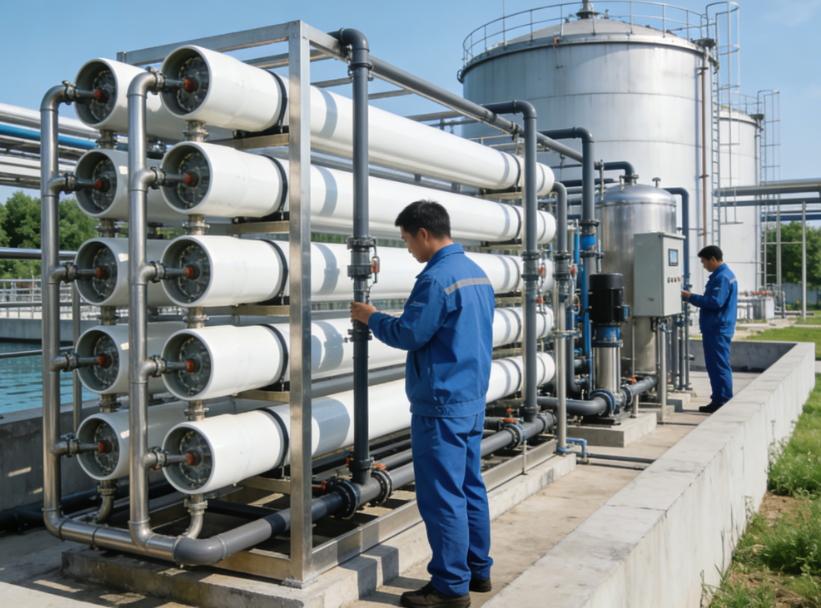
When controlled within regulated limits, residual chlorine in drinking water is considered safe. Health authorities worldwide recognize chlorine as an effective and reliable disinfectant that has significantly reduced waterborne diseases.
Public concern often arises from chlorine taste or smell, which usually indicates changes in concentration rather than a safety issue. Accurate and continuous monitoring allows utilities to keep chlorine levels within target ranges, balancing microbial protection with consumer comfort.
Residual chlorine can be measured using manual or automated methods. Manual methods, such as DPD colorimetric tests, are commonly used for spot checks. However, they depend heavily on operator consistency and cannot provide real-time insights.
In contrast, online monitoring systems offer continuous measurement of residual chlorine measurement levels. These systems are especially valuable in drinking water treatment plants and distribution networks, where chlorine concentration can fluctuate due to flow rate changes, temperature variation, or water demand.
Drinking water operators face constant pressure to ensure regulatory compliance while minimizing operational costs. Manual testing alone often leads to delayed responses and blind spots between measurements.
A reliable residual chlorine monitoring system allows operators to detect deviations immediately, optimize dosing, and avoid over-chlorination. Continuous monitoring not only improves safety but also supports automated dosing control and long-term data tracking, which are critical for audits and process optimization.
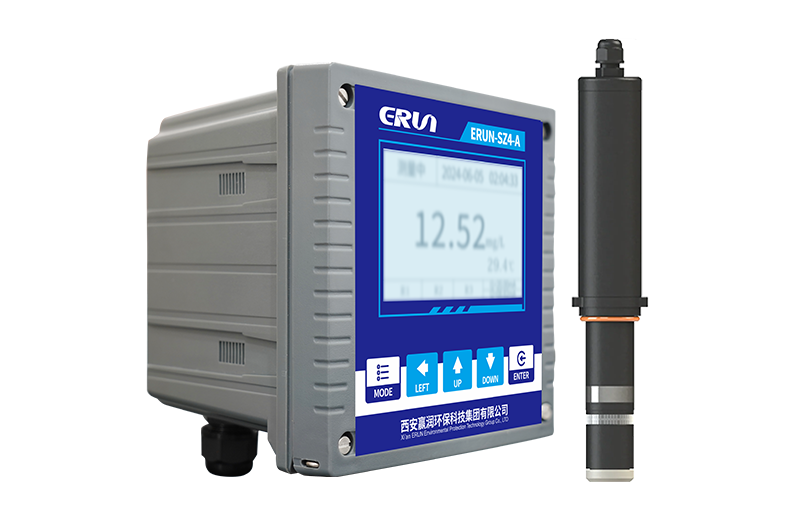
For facilities that require stable and accurate long-term monitoring, the ERUN-SZ1-A-K6 residual chlorine detector is designed to address real operational challenges.
Using a polarographic measurement method, the instrument delivers continuous and reliable residual chlorine data without frequent manual intervention. This helps water treatment operators maintain consistent disinfection levels while reducing labor and operational uncertainty.
The ERUN-SZ1-A-K6 supports continuous monitoring in drinking water treatment plants and distribution networks, enabling faster responses to chlorine fluctuations. Its stable performance helps prevent under-dosing, which risks microbial growth, and over-dosing, which can negatively impact taste and infrastructure. With communication capabilities for system integration and built-in data recording, it also simplifies compliance reporting and process management for water utilities.
Understanding what is residual chlorine in drinking water is essential for maintaining safe and reliable water supplies. Residual chlorine protects against microbial contamination throughout the distribution system, but only when properly controlled. Continuous monitoring provides the accuracy, responsiveness, and confidence needed for modern water management. Choosing a dependable online monitoring solution helps water professionals ensure compliance, improve efficiency, and deliver safe drinking water to end users.


