




Residual chlorine is widely used to protect water from microbial contamination. However, when chlorine levels are not properly controlled, they can create new problems for drinking water safety, industrial systems, and aquatic environments. Understanding how to reduce residual chlorine in water—while keeping disinfection effective—is essential for modern water management.
This guide explains where residual chlorine comes from, why excessive levels are undesirable, and how controlled reduction combined with accurate monitoring delivers safer and more reliable results.
Residual chlorine refers to the amount of chlorine that remains in water after the disinfection process is complete. Its purpose is to prevent bacterial regrowth during storage and distribution. While this protection is necessary, excessive concentrations can negatively affect water quality.
When residual chlorine exceeds recommended levels, it may cause unpleasant taste and odor in drinking water, accelerate corrosion in pipelines, and interfere with downstream treatment processes. In industrial applications, high chlorine levels can damage membranes, sensors, and sensitive equipment. For these reasons, reducing residual chlorine to a controlled and stable range is just as important as adding it in the first place.
Excess residual chlorine usually results from over-chlorination during treatment or fluctuations in water demand. In drinking water networks, long retention times in storage tanks and pipelines can cause chlorine accumulation.
In swimming pools and circulating water systems, continuous dosing without accurate feedback often leads to chlorine levels gradually rising above target values. Industrial and hospital wastewater systems may also experience elevated chlorine due to safety-focused dosing strategies that lack precise real-time adjustment.
High residual chlorine levels are not immediately dangerous, but prolonged exposure can create safety, operational, and compliance concerns. For consumers, overly chlorinated water is associated with strong odor, unpleasant taste, and possible irritation of skin and eyes.
From a technical perspective, excess chlorine can degrade rubber seals, corrode metal components, and reduce the lifespan of pipes and valves. In water treatment plants and industrial facilities, maintaining chlorine within regulated limits is critical to meeting quality standards and protecting infrastructure.
There are several widely used residual chlorine reduction methods, each with advantages and limitations depending on the application.
Natural dissipation allows chlorine to volatilize over time, but this method is slow and unreliable for controlled processes. Activated carbon filtration is effective for removing chlorine taste and odor, yet it requires frequent media replacement and performance monitoring.
Chemical dechlorination using agents such as sodium bisulfite provides rapid results but demands careful dosage control to avoid overdosing and secondary contamination. UV treatment can reduce chlorine under certain conditions, although it is not always suitable for continuous, high-flow systems.
Regardless of the method chosen, accurate measurement and real-time feedback are essential. Without proper monitoring, reduction efforts may become inconsistent, leading to either excessive chlorine or insufficient disinfection.
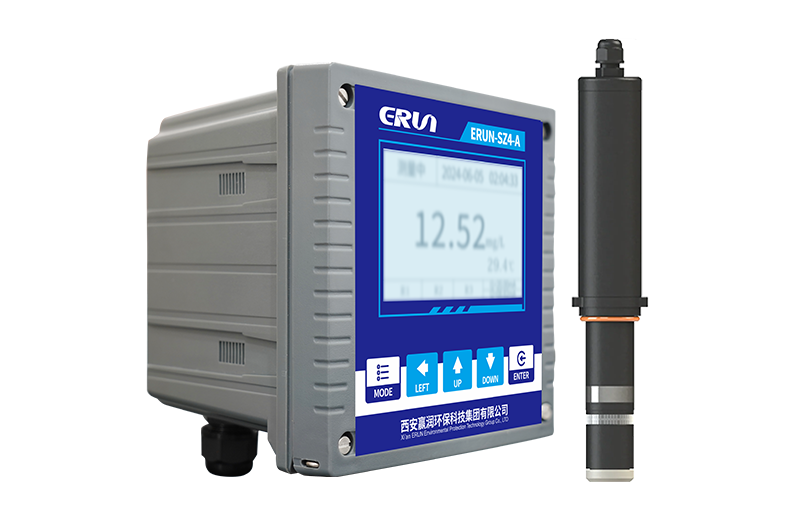
The ERUN-SZ1-A-K6 online residual chlorine monitor is designed to solve the challenge of maintaining stable chlorine levels during reduction processes. By providing continuous, real-time measurement, it allows operators to adjust dosing and dechlorination precisely rather than relying on estimates.
Using a polarographic method with a high-quality permeation membrane, the system delivers stable and repeatable data over long-term operation. This reliability helps water treatment plants, swimming pool operators, and industrial facilities avoid sudden chlorine fluctuations. The bilingual interface and data storage functions also simplify daily operation and compliance documentation.
Instead of focusing only on removal, the ERUN-SZ1-A-K6 supports balanced residual chlorine control, helping users reduce chlorine safely while maintaining disinfection effectiveness.
Reducing residual chlorine is not just about removal—it is about control. Effective reduction strategies depend on understanding chlorine sources, selecting appropriate reduction methods, and using reliable monitoring to maintain balance.
By combining proven treatment approaches with continuous measurement from tools like the ERUN-SZ1-A-K6, water professionals can reduce residual chlorine confidently, protect infrastructure, and ensure consistent water quality across a wide range of applications.


