




In water quality management, what is turbidity in water testing is a question that comes up frequently—especially for drinking water suppliers, waterworks operators, and pool managers. Turbidity is not just about how clear water looks. It directly reflects the presence of suspended particles that may affect safety, disinfection efficiency, and compliance. Understanding turbidity and how to measure it accurately is essential for maintaining stable and reliable water quality across different applications.
In turbidity water testing, turbidity refers to the cloudiness of water caused by suspended particles such as silt, clay, microorganisms, and organic matter. These particles scatter light rather than absorbing it, which is why turbidity is measured optically rather than chemically. The standard unit used is NTU (Nephelometric Turbidity Unit).
Turbidity is not the same as water color. Clear-looking water may still contain fine particles that create high turbidity levels. Similarly, turbidity is not a pollutant itself, but it is often an indicator of potential contamination or treatment inefficiency.
High turbidity can shield microorganisms from disinfectants like chlorine, reducing disinfection effectiveness. This makes drinking water turbidity control especially important at waterworks outlets and distribution endpoints.
Most water treatment systems require turbidity levels to remain extremely low—often below 1 NTU. Continuous monitoring ensures process stability, helps operators react quickly to abnormalities, and supports regulatory compliance.
Rainfall, sediment disturbance, algae growth, and seasonal runoff can rapidly increase turbidity levels in surface water sources.
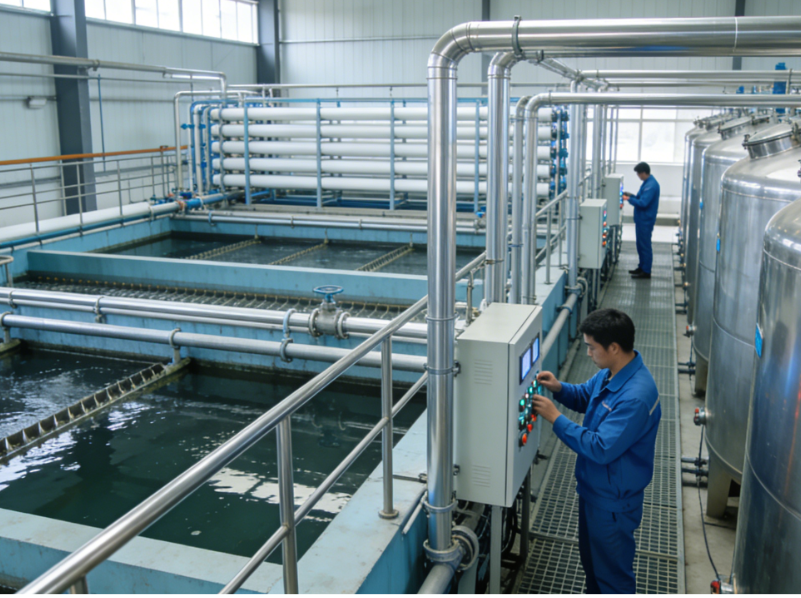
In water treatment and distribution systems, turbidity can increase due to filter breakthrough, pipeline aging, secondary water supply contamination, or membrane filtration system fluctuations.
Traditional laboratory testing relies on grab samples. While accurate, this method cannot reflect real-time water quality changes and may cause delays in detecting problems.
Online turbidity sensor systems provide continuous, real-time data. This allows operators to monitor trends, detect abnormalities early, and optimize treatment processes without relying solely on manual sampling.
Measuring turbidity below 1 NTU requires exceptional sensor stability. Optical drift, fouling, and frequent calibration needs often reduce measurement reliability.
For modern online turbidity monitoring, operators need long-term stability, high precision, minimal maintenance, and reliable data output—especially for drinking water and membrane filtration applications.
The ERUN-SZ2-B-B6C is designed specifically to address the real operational challenges faced in low range turbidity measurement.
Its ultra-low detection capability allows accurate measurement from 0–10 NTU, with optional customization for different application needs. With a resolution of 0.001 NTU and precision of ±2% or ±0.01 NTU, it ensures reliable monitoring even at drinking-water-level clarity.
More importantly for operators, the sensor is built for long-term, maintenance-free operation. This reduces labor costs, minimizes downtime, and supports continuous compliance. Its digital output and RS485-Modbus communication enable easy system integration, while cloud platform and mobile remote monitoring allow operators to check turbidity data anytime, anywhere.
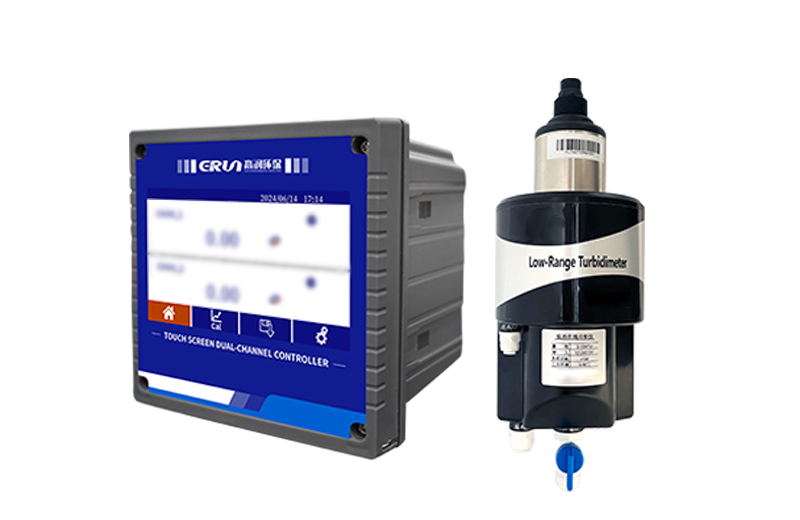
For users managing waterworks inlet and outlet water, secondary water supply systems, membrane filtration processes, or swimming pools, the ERUN-SZ2-B-B6C provides confidence that turbidity changes will be detected immediately—before they become larger problems
Understanding what is turbidity in water testing helps operators move from reactive testing to proactive control. Accurate, real-time turbidity monitoring supports safer water, better treatment performance, and easier regulatory compliance. Choosing a stable, low-maintenance turbidity sensor is not just a technical decision—it is a long-term operational advantage.


