




Chlorine dioxide is widely recognized as an effective disinfectant in modern drinking water treatment. Its strong oxidation ability, stability across a broad pH range, and lower tendency to form chlorinated by-products have made it an important alternative to traditional chlorine. As its application expands in municipal systems and secondary water supply networks, attention has shifted toward safety, regulatory limits, and monitoring requirements. Evaluating how major standards define permissible concentrations helps clarify whether Chlorine Dioxide Is Safe in Drinking Water and how it can be safely maintained in potable water systems.
Chlorine dioxide plays a dual role in drinking water treatment: microbial control and chemical oxidation. It is highly effective against bacteria, viruses, and protozoa while also addressing aesthetic and operational water quality challenges.
Typical treatment objectives include:
1. Inactivation of pathogenic microorganisms
2. Oxidation of iron and manganese
3. Control of biofilm in pipelines
4. Removal of taste and odor compounds
5. Reduction of algae and phenolic pollutants
Because chlorine dioxide remains effective in both acidic and alkaline environments, utilities often achieve more consistent disinfection performance compared with free chlorine, particularly in complex raw water conditions.
When maintained within regulated residual ranges, chlorine dioxide is considered safe for human consumption. Safety assessments focus not only on the disinfectant itself but also on its oxidative by-products, primarily chlorite and chlorate.
Elevated exposure beyond regulatory thresholds may lead to:
l Oxidative damage to red blood cells
l Hemolytic effects in sensitive individuals
l Thyroid function impacts
l Irritation of respiratory or digestive tissues
These toxicological findings underpin the establishment of conservative residual limits and continuous monitoring requirements in drinking water regulations.
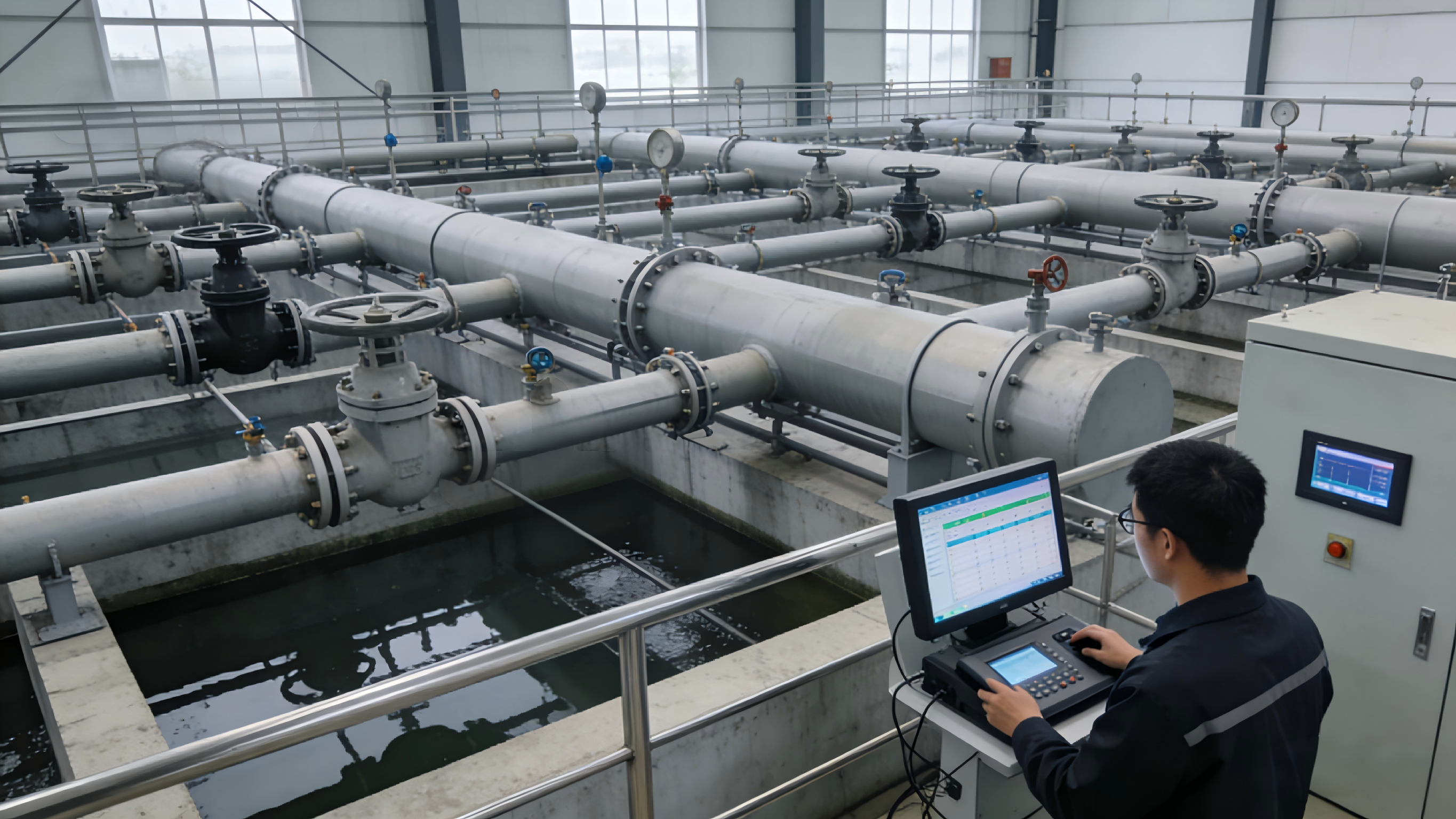
Two of the most referenced compliance frameworks governing chlorine dioxide in drinking water are the U.S. Environmental Protection Agency (EPA) standards under the Safe Drinking Water Act and China’s national drinking water standard GB 5749-2022.
Regulation / Standard | Chlorine Dioxide Limit | Residual Requirements | Compliance Context |
US EPA (SDWA) | MRDL: 0.8 mg/L | Distribution system control required | Enforceable federal regulation |
China GB 5749-2022 | ≤ 0.8 mg/L | Finished water ≥ 0.1 mg/L; Distribution ≥ 0.2 mg/L | National drinking water standard |
United States – EPA (SDWA)
The EPA sets a Maximum Residual Disinfectant Level (MRDL) of 0.8 mg/L for chlorine dioxide in finished drinking water. Monitoring is required at treatment plant entry points and within distribution systems to ensure residual disinfectant control without exceeding toxicological thresholds.
China – GB 5749-2022
China’s updated drinking water regulation defines both upper limits and minimum residual requirements:
l Factory (finished) water and distribution (tap) water: ≤ 0.8 mg/L
l Finished water residual: ≥ 0.1 mg/L
l Distribution system residual: ≥ 0.2 mg/L
This dual-threshold approach ensures not only chemical safety but also sustained microbial protection throughout the pipeline network.
Maintaining chlorine dioxide within regulatory windows requires precise analytical control. The compound’s volatility and reactivity create testing complexities, particularly in manual sampling environments.
Common limitations of traditional methods include:
Reagent dependency (e.g., DPD colorimetry)
Cross-interference from free chlorine
Sample degradation during transport
Operator handling variability
Such constraints have accelerated the adoption of continuous online monitoring technologies capable of delivering real-time disinfectant data.
Advanced electrochemical analyzers now enable reagent-free, high-precision chlorine dioxide measurement across treatment and distribution systems.
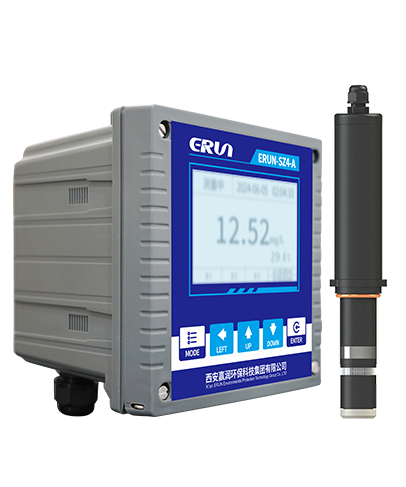
The ERUN Water Quality Chlorine Dioxide Online Analyzer (Model: ERUN-SZ4-A-K4) represents a modern solution engineered for regulatory compliance and operational efficiency.
Measurement range: 0–5 / 20 mg/L
Resolution: 0.001 mg/L
Accuracy: ±3%
Detection limit: ≤ 0.030 mg/L
Response time: T90 ≤ 90s
Its electrochemical detection system eliminates reagent consumption while preventing secondary pollution, aligning with green monitoring principles.
Sensor Technology and Detection Principle
The analyzer employs a coated digital disinfectant sensor built on a three-electrode amperometric architecture. A high-purity gold working electrode supports stable redox reactions on the sensor surface. The resulting current follows Faraday’s law, enabling precise quantification of chlorine dioxide concentration.
A built-in high-precision potentiostat stabilizes electrode potential, ensuring measurement reliability under fluctuating hydraulic and chemical conditions.
With RS485 MODBUS output, optional 4–20 mA analog transmission, IP68 protection, and circulating installation compatibility, the system integrates seamlessly into municipal and industrial water treatment infrastructures.
Adhering to disinfectant limits is not solely a legal obligation; it directly influences public health protection and distribution system integrity. Residuals that exceed 0.8 mg/L may indicate overdosing or control failure, while insufficient residuals risk microbial regrowth.
Utilities maintaining compliance typically deploy:
l Multi-point residual monitoring
l Automated dosing feedback control
l By-product surveillance
l Preventive sensor calibration
l SCADA-integrated analyzer networks
These strategies ensure disinfectant stability from treatment plant discharge to consumer tap.


