




In modern water quality management systems, water quality alkalinity testers have become key equipment to ensure the stable operation of water treatment systems. As a core indicator measuring the buffer capacity of water bodies, alkalinity directly affects the acid-base balance, metal solubility and corrosion tendency of water, and is widely used in industrial circulating water, boiler water, drinking water treatment, aquaculture and other scenarios. In accordance with the national standard GB/T 15451-2006 Determination of Total Alkalinity and Phenolphthalein Alkalinity in Industrial Recirculating Cooling Water, mastering scientific determination methods and selecting appropriate total alkalinity testers are of great significance for preventing equipment corrosion, reducing scaling risks and ensuring production safety.
The acid-base indicator titration method is one of the two benchmark methods specified in the national standard, which achieves precise determination through stepwise titration with phenolphthalein and methyl orange dual indicators. Phenolphthalein alkalinity takes pH 8.3 as the end point, reflecting the content of hydroxides and half of carbonates; continuing titration to the methyl orange alkalinity at pH 4.5 determines the total alkalinity, including all alkaline substances such as bicarbonates. This method is simple to operate and low in cost, suitable for routine laboratory analysis, but it is prone to visual errors for turbid or colored water samples, with a precision of about ±2%.
As another benchmark method specified in the national standard, the potentiometric titration method uses pH electrodes to real-time monitor pH changes during titration, and calculates alkalinity by automatically determining the titration end points of pH 8.3 and pH 4.5. This method has high precision and strong anti-interference ability, is not affected by water color or turbidity, and is suitable for complex water quality scenarios such as industrial recirculating cooling water and boiler water. According to GB/T 15451-2006 standard, potentiometric titration can eliminate manual judgment errors and achieve high reproducibility of data, making it the preferred solution for high-precision laboratories and industrial scenarios.
Application Scenario | Recommended Method | Precision Level | Operational Convenience | Core Advantages |
Laboratory Precision Analysis | Potentiometric Titration | High (±0.1%) | Medium | Eliminates color difference interference, with accurate and reliable data |
On-Site Rapid Screening | Acid-Base Indicator Titration | Medium (±2%) | High | Low equipment requirements, suitable for batch testing |
Industrial Continuous Monitoring | Acid-Base Indicator Titration (Automated) | High (±0.5%) | Low | 24/7 real-time monitoring, supporting remote transmission |
Emergency On-Site Detection | Acid-Base Indicator Titration (Portable) | Medium (±3%) | High | Portable, enabling immediate results in fieldwork |
The total alkalinity of boiler water is usually controlled at 10~1000 mg/L (as CaCO₃); excessively high alkalinity will cause calcium carbonate scaling and pipeline blockage, while excessively low alkalinity will accelerate metal corrosion. The total alkalinity of drinking water shall comply withGB 5749-2022 Standards for Drinking Water Quality, usually maintained in the range of 30~200 mg/L. The optimal total alkalinity of aquaculture water is 80~150 mg/L; insufficient alkalinity will cause severe pH fluctuations and affect the growth of aquatic organisms.
To meet different monitoring needs, ERUN Environmental Protection provides a full range of water quality alkalinity determination equipment.
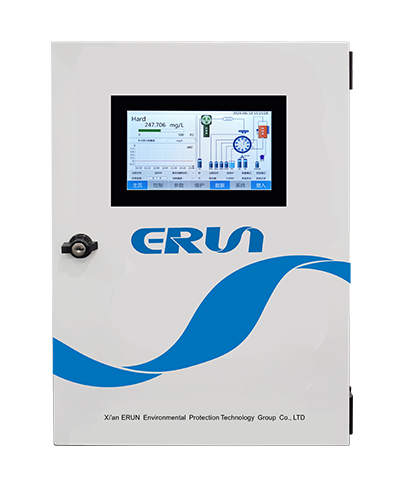
The Online Total Alkalinity Monitoring and Analysis System ERUN-SZ3-B3 is designed with reference to GB/T 15451-2006 standard, based on the principle of acid-base indicator titration, to achieve 24-hour continuous monitoring. The system adopts methyl orange color development technology, with a single measurement reagent consumption of less than 3mL, a measurement precision of ±10%, supports automatic range switching and automatic turbidity compensation, and is widely applicable to boiler water, circulating cooling water and wastewater monitoring.
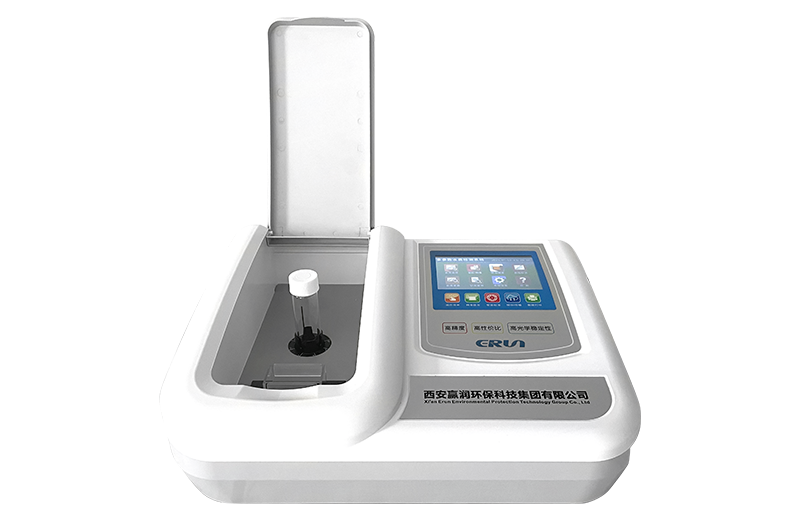
The Benchtop Water Quality Alkalinity Tester ERUN-ST7-B3 adopts an imported high-performance cold light source, based on the principle of acid-base indicator titration, with a measurement range of 0.00~1000.0mg/L, a basic error of ≤±5%, and results available in 10 minutes. The instrument automatically selects the wavelength without calibration, supports USB data transmission and printing functions, and is suitable for laboratory quality control and environmental protection inspection stations.
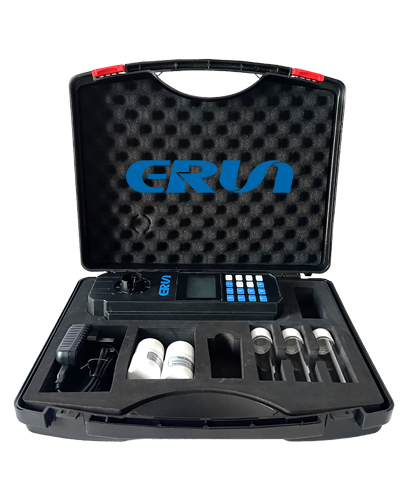
The Portable Total Alkalinity Water Quality Tester ERUN-SP5-B3 has a compact size of only 80mm×230mm×55mm and a weight of 500g. The IP65 protection design ensures corrosion resistance, water resistance and dust resistance, and the built-in lithium battery supports long-term outdoor operation. Based on the principle of acid-base indicator titration, the instrument has a measurement range of 0~1000mg/L, an indication error of ≤±5%, and can store 199 measured values with time labels, perfectly suitable for field emergency, aquaculture pond and swimming pool on-site detection needs.
Scientific water quality alkalinity management needs to combine specific scenario standards, reasonably select determination methods and configure professional equipment. From high-precision laboratory analysis to continuous industrial on-site monitoring, a complete detection system not only ensures water quality compliance, but also effectively reduces equipment loss and operation and maintenance costs, laying a solid safety line for the sustainable utilization of water resources.


