




In complex industrial water treatment, a single-parameter spike is often a symptom of a systemic failure. This article explores how correlating real-time data—pH, COD, Ammonia, and more—creates a proactive defense mechanism that ensures 100% compliance while reducing chemical OPEX by up to 20%.
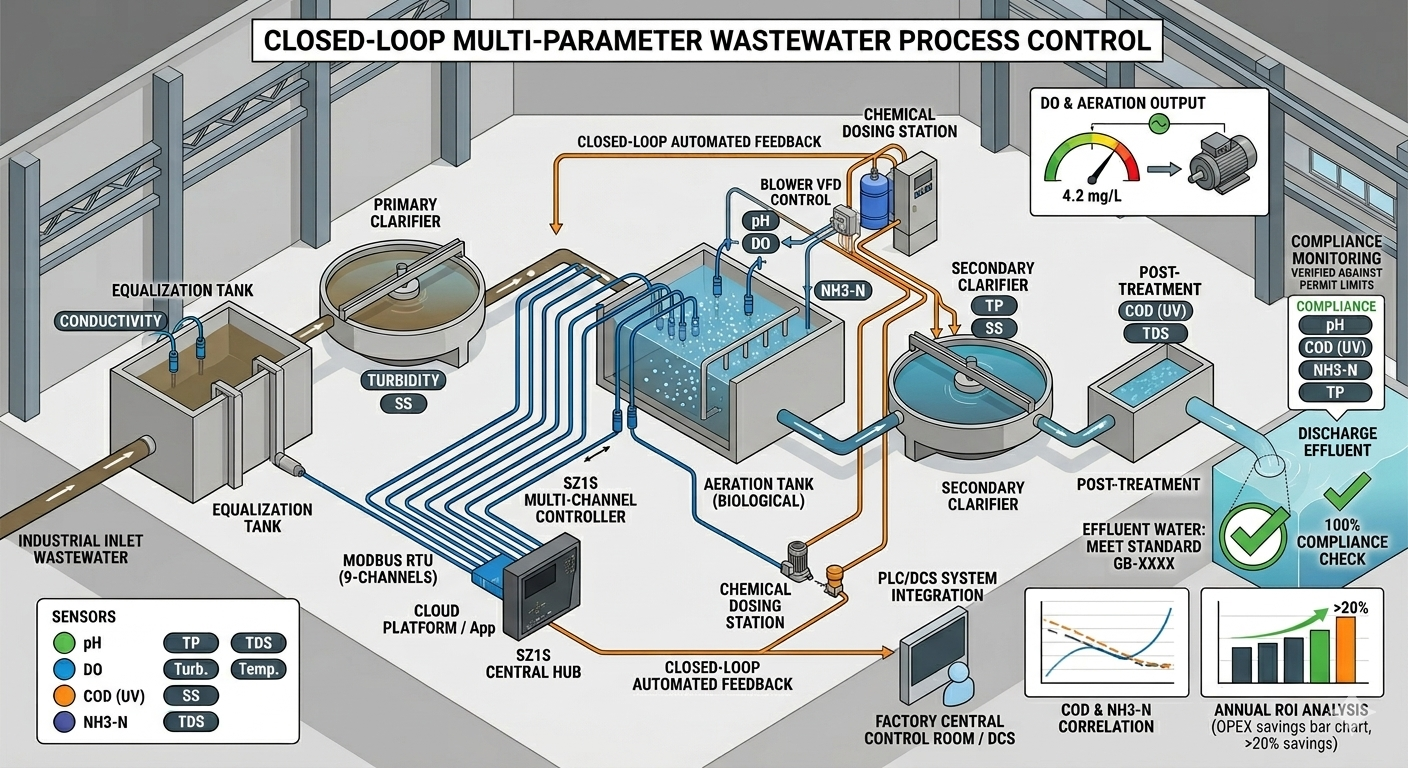
In industries like chemical processing, electroplating, or papermaking, plant managers often face a paradox: the pH levels are within range, yet the effluent COD or Total Phosphorus (TP) suddenly spikes.
This happens because wastewater is a dynamic chemical ecosystem. For instance, Ammonia removal efficiency is not just about concentration; it is deeply dependent on Dissolved Oxygen (DO) levels and Temperature. If you only monitor Ammonia without tracking DO fluctuations, you might miss a looming biological failure in the aeration tank until it's too late.
Modern industrial facility management is shifting from manual sampling to Full-Process Online Monitoring. A high-reliability system should cover every critical stage of the treatment plant:
1. Inlet Pre-warning: Monitor Conductivity and pH at the equalization tank. If a sudden surge in salt or acid is detected (indicating a leak or process spill), the system should instantly trigger a bypass or shut-off valve to protect the downstream biological treatment from "toxic shock."
2. Biological Process Control: Correlate DO and Suspended Solids (SS). By using real-time data to guide VFD-controlled blowers, plants can ensure optimal nitrification while eliminating the massive electricity waste caused by over-aeration.
3. Effluent Assurance: Utilize UV-Spectrum COD and Ammonia sensors. Unlike traditional wet-chemistry methods, second-level response times allow you to adjust dosing pumps the moment a fluctuation starts, not hours after the damage is done.
To ensure compliance, many plants default to a "conservative" strategy—over-dosing expensive chemicals like PAC, PAM, or carbon sources. This not only wastes money but also leads to excessive sludge production.
The Solution: Closed-Loop Automation.
By utilizing an integrated multi-parameter controller (such as the SZ1S, which supports up to 9 sensor inputs), real-time data is fed directly back to the PLC or dosing pumps.
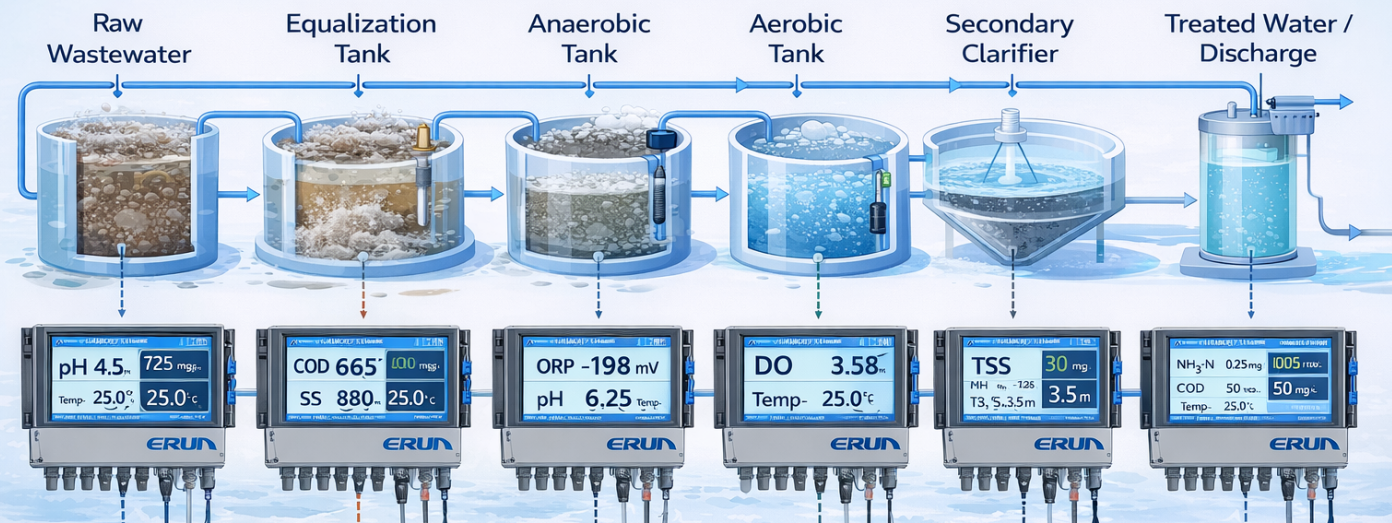
Case Study: When effluent Phosphorus stabilizes at 0.3 mg/L (against a 0.5 mg/L limit), the system automatically scales back the dephosphorization agent. Real-world implementations show an average 15%–22% reduction in chemical costs.
In high-salinity, high-temperature, or corrosive environments, sensor maintenance is the primary cost driver.
Self-Cleaning Optics: Manual cleaning of sensor windows is impractical. Probes equipped with automatic air-blast or mechanical brushes effectively handle oil and biofilm buildup, extending maintenance intervals from weekly to quarterly.
The Digital Advantage: Unlike 4-20mA analog signals prone to electromagnetic interference (EMI) from large motors, RS485 Modbus protocols ensure data remains accurate over hundreds of meters—a necessity for large-scale distributed monitoring.


