Water quality is the cornerstone of successful aquaculture. Whether you’re running a small-scale fish farm or a large commercial aquaculture operation, monitoring key water parameters is non-negotiable—it directly impacts the health of your aquatic stock, reduces mortality rates, and maximizes your profitability. Unmonitored water quality can lead to sudden disease outbreaks, stunted growth, and catastrophic losses that could put your business at risk. In this comprehensive guide, we break down the most critical aquaculture water testing indicators, explain their optimal ranges, and show you how a reliable handheld tester from Yingrun Environmental can simplify your monitoring process and protect your investment.
As a leading manufacturer of water quality testing equipment in China, Yingrun Environmental specializes in portable aquaculture water testers designed for on-site, rapid, and accurate detection. Our handheld devices are engineered to meet the diverse needs of global aquaculture farmers, covering all essential water parameters with high precision and user-friendly operation—making them the ideal tool for both novice and experienced growers.
Why Regular Aquaculture Water Testing Is Non-Negotiable
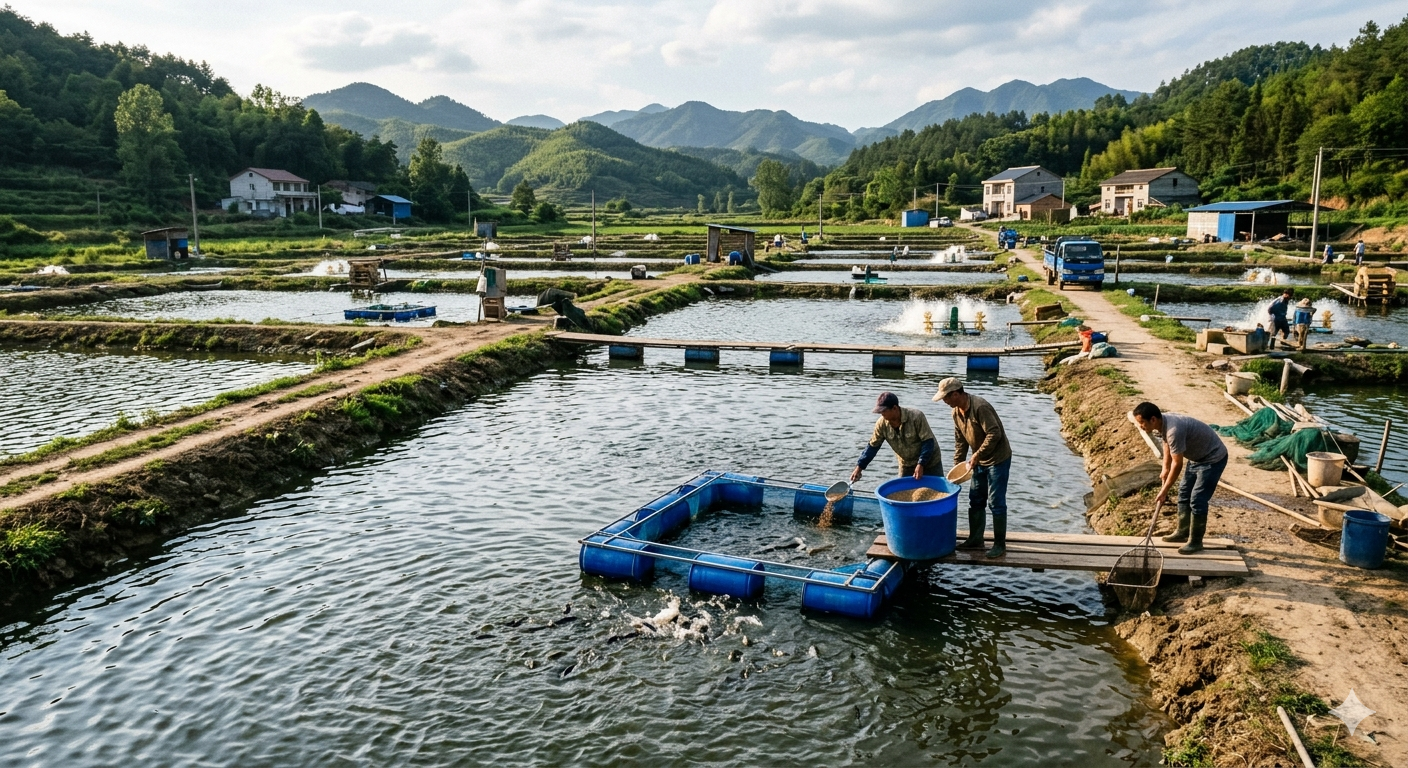
Aquaculture systems are dynamic ecosystems, where water parameters fluctuate constantly due to factors like feeding, waste accumulation, temperature changes, and algae growth. Even small deviations from optimal ranges can stress aquatic organisms, weaken their immune systems, and create a breeding ground for harmful bacteria and parasites. For example, low dissolved oxygen levels can cause mass mortality within hours, while high ammonia concentrations can poison fish and shrimp without warning. Regular testing allows you to identify issues early, take proactive measures, and maintain a stable environment for your stock to thrive.
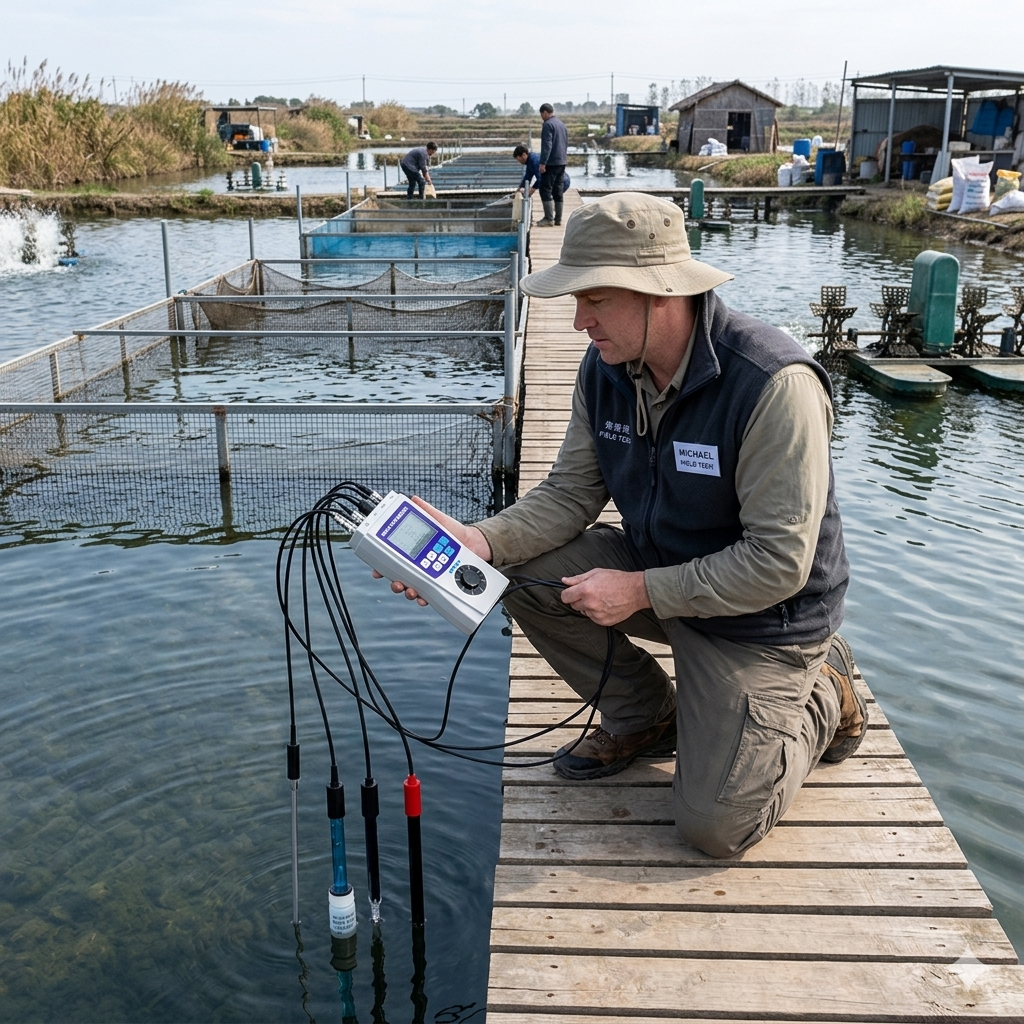
With Yingrun Environmental’s handheld aquaculture water tester, you can perform on-the-spot testing anytime, anywhere—no lab equipment or technical expertise required. Our devices deliver real-time results, enabling you to make immediate adjustments to your water conditions and avoid costly losses. This level of convenience and accuracy is why farmers worldwide trust Yingrun for their water quality monitoring needs.
The Critical Aquaculture Water Testing Indicators You Must Monitor
Not all water parameters are equally important, but there are 8 core indicators that every aquaculture farmer should track consistently. Below, we detail each indicator, its optimal range for common aquaculture species, and how Yingrun’s handheld tester ensures accurate and reliable measurements.
1. Dissolved Oxygen (DO): The "Breath of Life" for Aquatic Organisms
Dissolved oxygen is the most critical parameter in aquaculture—all aquatic animals (fish, shrimp, shellfish) require oxygen to breathe, and even short periods of low DO can be fatal. The optimal DO level varies by species, but most commercial aquaculture species thrive at $$>5 mg/L$$. Trout and salmon require higher levels ($$>6 mg/L$$), while tilapia and catfish can tolerate short-term dips to $$3 mg/L$$. DO levels drop significantly at night due to algae respiration and organic matter decomposition, making early-morning testing essential.
Yingrun Environmental’s handheld aquaculture water tester features advanced electrochemical sensors that deliver precise DO readings with an error margin of ≤±0.2 mg/L. The device’s automatic temperature compensation (ATC) ensures accuracy even as water temperatures fluctuate—critical because warm water holds less oxygen than cold water. With a compact, waterproof design (IP67 rating), you can easily test DO levels directly at your ponds, tanks, or cages, without worrying about equipment damage.
2. pH Level: The Acidity-Alkalinity Balance
pH measures the acidity or alkalinity of water, and it affects the toxicity of other parameters (such as ammonia) and the overall health of aquatic organisms. Most aquaculture species prefer a neutral to slightly alkaline environment, with an optimal range of $$6.5–8.5$$. Freshwater fish like carp can tolerate a wider range ($$6.0–9.0$$), while shrimp and shellfish require a more stable range of $$7.5–8.5$$. Fluctuations in pH (more than 0.5 units in a day) can stress fish and reduce their ability to absorb oxygen.
Yingrun’s handheld tester provides fast pH readings with an accuracy of ≤±0.1, allowing you to monitor even small fluctuations. The device comes pre-calibrated for convenience, and one-button calibration ensures long-term accuracy. Whether you’re adjusting pH with lime (for low pH) or organic acids (for high pH), our tester gives you the data you need to make precise adjustments.
3. Ammonia (NH₃-N): The Silent Toxicant
Ammonia is a byproduct of fish waste, uneaten feed, and organic matter decomposition. It exists in two forms: unionized ammonia (NH₃), which is highly toxic to aquatic organisms, and ionized ammonia (NH₄⁺), which is relatively harmless. The optimal level of total ammonia nitrogen (TAN) is $$≤0.2 mg/L$$ for most species, and unionized ammonia should be $$≤0.02 mg/L$$. High ammonia levels cause gill damage, lethargy, loss of appetite, and eventual death—especially in juvenile fish and shrimp.
Yingrun’s handheld aquaculture water tester accurately measures ammonia levels with a precision of ≤±5%, even at low concentrations. The device’s sensitive sensors can detect trace amounts of unionized ammonia, helping you identify potential issues before they harm your stock. For high-density farming operations, this level of accuracy is critical to maintaining water quality and avoiding mass mortality.
4. Nitrite (NO₂⁻): The Intermediate Toxic Waste
Nitrite is a byproduct of the nitrification process, where beneficial bacteria convert ammonia into nitrite and then into nitrate. While less toxic than ammonia, high nitrite levels ($$>0.1 mg/L$$) can cause methemoglobinemia (a condition that reduces the blood’s ability to carry oxygen), leading to suffocation and death. The optimal nitrite level for all aquaculture species is $$≤0.1 mg/L$$.
Yingrun’s handheld tester includes a dedicated nitrite sensor that delivers fast, accurate readings. The device’s user-friendly interface displays results in seconds, allowing you to take immediate action if nitrite levels rise—such as increasing water exchange or adding nitrifying bacteria. Our tester’s portability means you can test multiple locations across your farm to identify problem areas quickly.
5. Temperature: The Regulator of Metabolic Activity
Water temperature directly impacts the metabolic rate, growth, and reproduction of aquatic organisms. Different species have different optimal temperature ranges: tilapia thrive at $$25–30°C$$, shrimp at $$22–30°C$$, trout at $$12–18°C$$, and海参 (sea cucumbers) at $$10–16°C$$. Temperature fluctuations of more than 2°C in a day can stress fish and reduce their growth rate.
Yingrun’s handheld tester includes a built-in temperature sensor that measures temperature in both °C and °F, with an accuracy of ±0.1°C. The device’s ATC feature ensures that other parameter readings (like DO and pH) are adjusted for temperature, providing more accurate results. With real-time temperature data, you can adjust heating or cooling systems to maintain optimal conditions for your stock.
6. Salinity: Critical for Brackish and Marine Species
Salinity measures the amount of dissolved salts in water, and it is essential for marine and brackish water species. Freshwater species require salinity levels $$<1‰$$, while marine species like shrimp and salmon need $$25–35‰$$. Some euryhaline species (like tilapia and carp) can tolerate a wide range of salinity, but sudden changes (more than 5‰ in a day) can be fatal.
Yingrun’s handheld aquaculture water tester includes a salinity sensor that measures ranges from 0–40‰, with an accuracy of ±0.1‰. This is ideal for farmers raising both freshwater and marine species, as the device can easily switch between modes. The compact design makes it easy to test salinity at different points in your farm, ensuring consistent conditions across all tanks or ponds.
7. Total Alkalinity: The pH Buffer
Total alkalinity measures the water’s ability to resist changes in pH (buffering capacity). It is critical for maintaining stable pH levels, especially in systems with high algae growth. The optimal total alkalinity range is$$80–120 mg/L$$ (as CaCO₃) for most aquaculture systems, and $$>100 mg/L$$ for shrimp farming. Low alkalinity can lead to rapid pH fluctuations, which stress aquatic organisms and reduce their immune function.
Yingrun’s handheld tester can measure total alkalinity with high precision, allowing you to add buffers (like baking soda or dolomite) as needed to maintain optimal levels. The device’s clear display and easy-to-understand results make it simple to monitor and adjust alkalinity, even for farmers with limited technical experience.
8. Hydrogen Sulfide (H₂S): The Hidden Danger
Hydrogen sulfide is a toxic gas produced by anaerobic bacteria in oxygen-poor environments (such as the bottom of ponds with accumulated organic matter). It has a distinct rotten egg smell and is highly toxic to aquatic organisms—even levels $$>0.1 mg/L$$ can cause gill damage and mortality. The optimal level of hydrogen sulfide is $$≤0.02 mg/L$$.
Yingrun’s handheld aquaculture water tester includes a sensitive hydrogen sulfide sensor that detects trace amounts of the gas. This allows you to identify oxygen-poor areas in your farm (such as the pond bottom) and take action (like increasing aeration) to prevent toxic buildup. Our tester’s portability means you can test deep water layers where hydrogen sulfide is most likely to accumulate.
Why Choose Yingrun Environmental’s Handheld Aquaculture Water Tester?
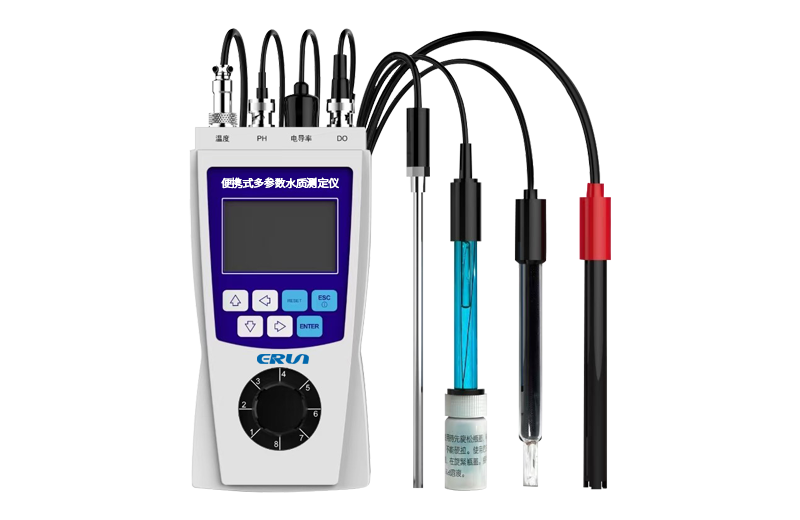
When it comes to aquaculture water testing, accuracy, convenience, and durability are key. Yingrun Environmental’s handheld aquaculture water tester is designed to meet the unique needs of global farmers, with features that set it apart from competitors:
Multi-parameter Detection: Covers all 8 critical indicators (DO, pH, ammonia, nitrite, temperature, salinity, total alkalinity, hydrogen sulfide) in one device, eliminating the need for multiple test kits.
High Precision: Advanced sensors ensure accurate readings (DO error ≤±0.2 mg/L, pH error ≤±0.1, ammonia error ≤±5%), providing reliable data for informed decision-making.
User-Friendly Design: One-button operation, large backlit LCD display, and pre-calibrated sensors make it easy to use—no technical expertise required.
Durable and Portable: IP67 waterproof rating, lightweight design, and long battery life (≥12 hours continuous use) make it perfect for on-site testing in harsh aquaculture environments.
Cost-Effective: Affordable pricing, replaceable electrodes, and low maintenance costs make it accessible for small and large farms alike.
As a trusted manufacturer with years of experience in water quality testing equipment, Yingrun Environmental is committed to providing high-quality, reliable products that help farmers improve their aquaculture operations. Our handheld aquaculture water tester is CE and FDA certified, meeting international standards for quality and safety.
Conclusion: Protect Your Aquaculture Investment with Regular Testing
Monitoring key aquaculture water testing indicators is the best way to ensure the health of your aquatic stock, reduce mortality rates, and maximize profitability. With the right tools, testing can be simple, fast, and accurate—allowing you to focus on growing your business rather than dealing with preventable losses.
Yingrun Environmental’s handheld aquaculture water tester is the ideal solution for farmers worldwide who want to take control of their water quality. Our device delivers precise, real-time results for all critical parameters, making it easy to identify issues early and take proactive measures. Whether you’re a small-scale farmer or a large commercial operation, Yingrun’s handheld tester will help you maintain optimal water conditions and protect your investment.
For more information about Yingrun Environmental’s handheld aquaculture water tester, or to request a sample, contact our team today. Let us help you simplify your water quality monitoring and take your aquaculture operation to the next level.