




Residual chlorine is one of the most important indicators in ensuring safe drinking water, effective disinfection, and stable water treatment processes. Whether you are managing a municipal water plant, conducting environmental monitoring, or performing on-site inspections, understanding the normal range for residual chlorine is critical for maintaining water safety.
This article explains what residual chlorine is, why its range matters, how different standards define “normal,” common problems caused by abnormal levels, and how modern tools—such as the ERUN-SP9 Portable Multi-Parameter Water Quality Tester—help achieve accurate and reliable monitoring.
Residual chlorine refers to the amount of chlorine remaining in water after the initial disinfection process. It continues to protect water from microbial contamination during storage and distribution. Residual chlorine is generally divided into:
Free chlorine
Combined chlorine
Total residual chlorine
These indicators reflect how effectively water is disinfected and how safe it is for consumption.
Different global standards define “normal” or “safe” levels slightly differently. However, most water quality guidelines agree on the following ranges:
Free residual chlorine: 0.2–0.5 mg/L
Maximum allowable value: 4 mg/L (United States EPA)
1–3 mg/L, depending on usage intensity
Standards vary but generally require much lower limits to prevent ecological impact.
A value below the minimum means insufficient disinfection.
A value above the maximum may cause odor, irritation, corrosion, and harmful byproduct formation.
Adequate residual chlorine prevents microbial regrowth during storage, transport, or in distribution pipelines.
Low residual chlorine levels increase risks of pathogens such as:
E. coli
Norovirus
Giardia
Legionella
High residual levels may produce harmful disinfection byproducts.
Excess chlorine accelerates corrosion in:
Water pipelines
Storage tanks
Boilers and cooling systems
This increases maintenance costs and operational risks.
Stable residual chlorine measurement is a critical requirement for:
Waterworks
Environmental monitoring agencies
Industrial water system operators
Laboratories and research institutions
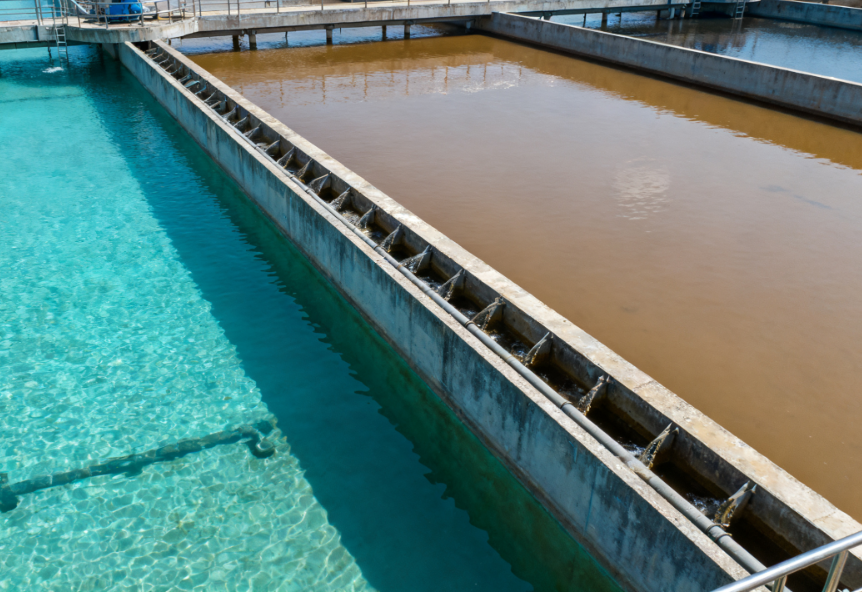
Residual chlorine fluctuates due to many natural and operational reasons:
Water temperature
pH value
Organic matter concentration
Pipe age and condition
Initial chlorine dosage
Contact time
Sunlight and environmental exposure
Accurate on-site monitoring is essential to quickly identify variations and prevent downstream risk.
The ERUN-SP9 is engineered for professional water quality monitoring and is ideal for field environments requiring high-precision chlorine measurement.
Supports over 60 water quality parameters, including:
Residual chlorine
pH
Conductivity
TDS
Salinity
Dissolved oxygen
Water temperature
…and more.
Users can customize parameter combinations to suit different applications.
Ensures stable reactions and accurate results even in outdoor conditions.
Supports field testing without an external power supply, enhancing mobility and productivity.
Suitable for:
Waterworks
Environmental monitoring units
Universities & research labs
Sewage treatment plants
Drinking water & groundwater testing
Industrial self-inspection
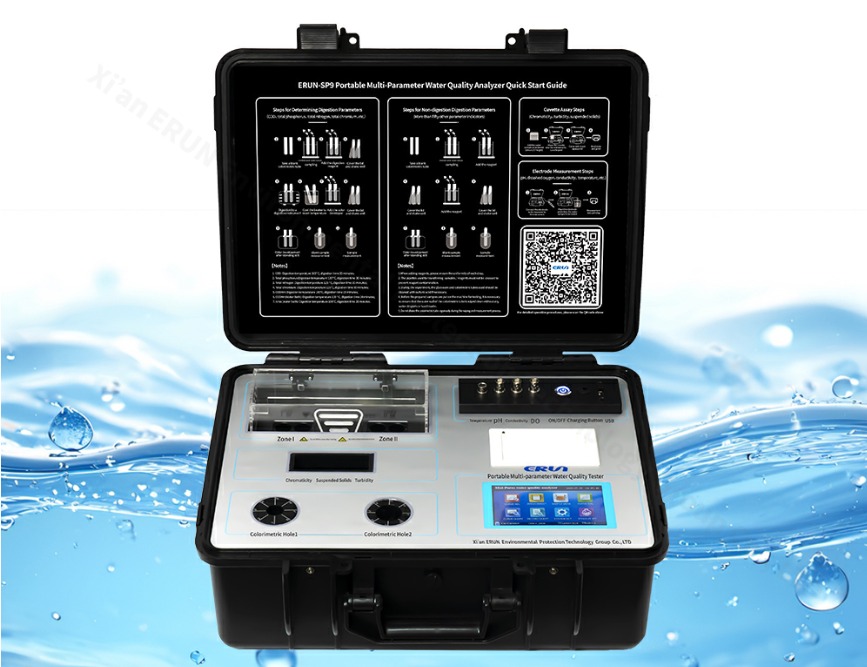
Highly accurate optical chlorine measurement
Multi-parameter capability reduces equipment load
Stable measurements in varying pH, temperature, and environmental conditions
Excellent for compliance inspections and emergency troubleshooting
Designed for intensive field use
To ensure water safety and regulatory compliance:
Drinking water: 0.2–0.5 mg/L (typical safe range)
Upper limit: 4 mg/L (EPA guideline)
Higher ranges apply to swimming pools and certain industrial uses
Regular monitoring is essential because residual chlorine levels can fluctuate due to environmental factors and system conditions. The ERUN-SP9 Portable Multi-Parameter Water Quality Tester provides a comprehensive, accurate, and efficient solution for modern water quality professionals.


