




In the world of water safety, clarity is often the first thing we notice, but its significance goes far deeper than aesthetics. Turbidity—the "cloudiness" of water—serves as a primary indicator of overall quality. But what is the turbidity test exactly? It is a specialized analysis used to quantify the concentration of suspended particles that can harbor pathogens, heavy metals, or interfere with industrial processes. Whether you are managing drinking water supplies or large-scale wastewater treatment plants, accurate turbidity monitoring is your first line of defense against contamination and system failure.
The turbidity test is an optical measurement. When a light beam is directed through a water sample, suspended solids—such as silt, algae, and organic matter—scatter the light in different directions.
Instruments called nephelometers measure the intensity of light scattered at a 90-degree angle. This measurement is typically reported in Nephelometric Turbidity Units (NTU). The more particles in the water, the more the light scatters, resulting in a higher NTU value.
While related, these two parameters are not the same. A turbidity test measures how particles interfere with light, while Total Suspended Solids (TSS) measures the actual mass of the particles per volume of water (mg/L). Turbidity is used as a fast, non-destructive surrogate to estimate the cleanliness of a system in real-time.
For drinking water, the standards are remarkably strict. The WHO (World Health Organization), establishes that the turbidity of drinking water shouldn't be more than 5 NTU, and should ideally be below 1 NTU. This is because turbid water can shield bacteria and viruses from disinfectants like chlorine or UV light.
Beyond health, turbidity matters for equipment longevity. In thermal power plants, high turbidity in boiler water can lead to scale buildup and reduced heat exchange efficiency. Constant monitoring ensures that water quality stays within operational limits, preventing costly downtime.
To achieve high measurement accuracy, lab technicians follow a rigorous protocol:
Sample Collection: Water is collected in a clean, non-reactive container, ensuring no air bubbles are trapped, as bubbles can be misread as particles.
Cuvette Preparation: The glass vial (cuvette) must be pristine. Even a fingerprint or a tiny scratch can scatter light and skew the results.
Measurement: The cuvette is placed in the tester, and the digital sensor provides an NTU reading within seconds.
When accuracy and ease of use are non-negotiable, the ERUN-97-T4 stands out as a premier solution for laboratory water analysis.
Solutions Provided to Customers:
Unmatched Stability and Accuracy: The ERUN-97-T4 is built to provide stable and accurate results across its entire 0-400 NTU range. This removes the guesswork for technicians dealing with fluctuating water quality in surface water or sewage.
Data Integrity via Printing Function: One of the biggest challenges in a busy lab is manual data entry errors. The ERUN-97-T4 features a built-in printing function, allowing operators to generate an immediate hard copy of the results. This is essential for audit trails in industrial wastewater management.
User-Friendly Design: Labeled as "easy to use," this instrument requires minimal training. This solution allows facilities to rotate staff without compromising the quality of the turbidity test.
Broad Application Range: From the determination of surface water to the monitoring of industrial wastewater, this detector adapts to the specific needs of your facility, ensuring you only need one instrument for multiple departments.
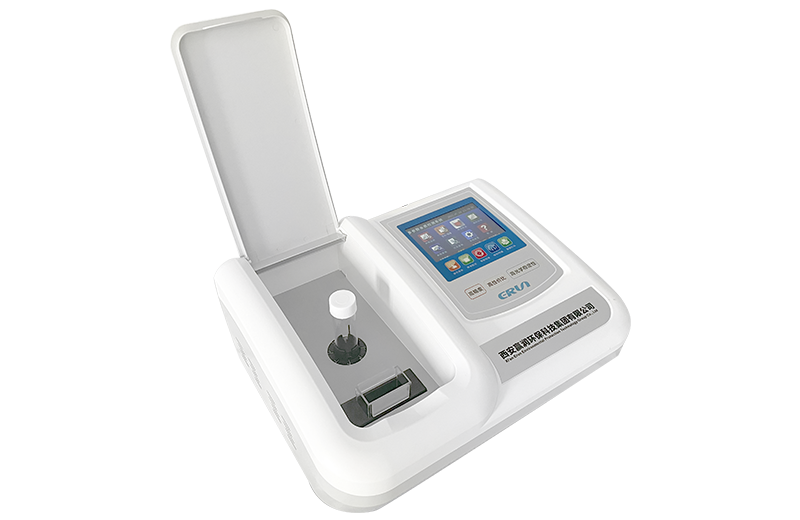
Answering the question "what is the turbidity test" reveals it as a pillar of modern environmental science. Whether you are protecting an ecosystem or an industrial plant, the ERUN-97-T4 provides the stable and accurate data you need to remain compliant.
By utilizing the 0-400 NTU range and the integrated printing function of the ERUN-97-T4, your laboratory can streamline its workflow and ensure every water quality report is beyond reproach.


