




Effective wastewater management starts with understanding wastewater testing parameters and monitoring them accurately. For industrial facilities, wastewater quality is not only a regulatory requirement but also a key factor affecting equipment safety, process efficiency, and long-term operating costs.
From power plants to petrochemical and metallurgical industries, precise control of wastewater parameters helps prevent system damage, reduce downtime, and ensure stable production. This article explains the most important wastewater testing parameters, highlights the role of silicate monitoring, and shows how automated analyzers improve testing reliability.
Wastewater quality directly impacts regulatory compliance, environmental responsibility, and process safety. If key parameters are not properly controlled, facilities may face fines, environmental risks, and premature equipment failure.
Industrial wastewater is often more complex than municipal wastewater. It may contain high levels of dissolved solids, corrosive substances, or silica-related compounds that are harmful to boilers and steam systems. Monitoring wastewater quality parameters allows operators to detect issues early and optimize treatment strategies before problems escalate.
To manage wastewater effectively, operators must monitor a combination of physical and chemical indicators that together reflect overall water quality.
Temperature affects chemical reactions and biological treatment efficiency.
Turbidity and suspended solids indicate particle content that can clog membranes or damage downstream equipment.
pH influences corrosion, scaling, and treatment chemical performance.
Conductivity reflects dissolved ionic content.
COD and BOD measure organic pollution levels.
Nutrients and dissolved substances reveal treatment load and contamination risks.
Together, these industrial wastewater testing parameters provide a complete picture of system health.
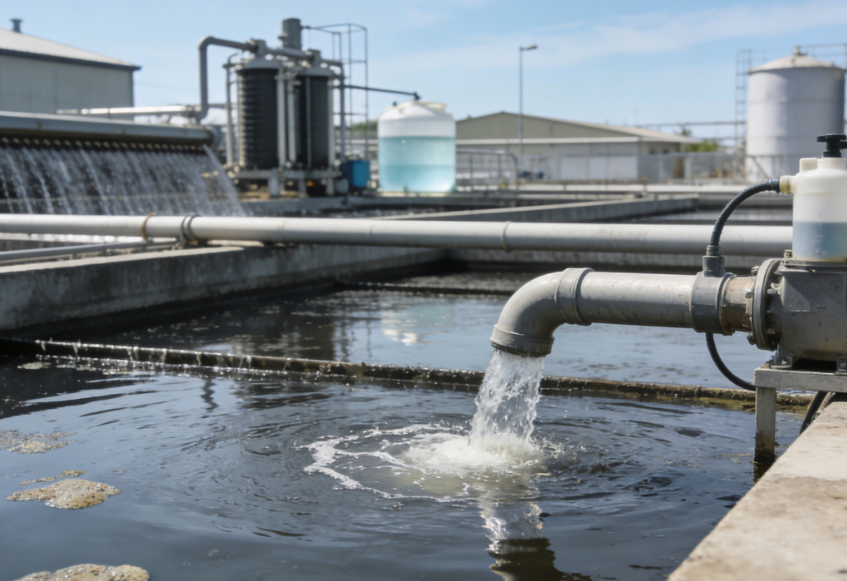
Among all chemical indicators, silicate is often underestimated—but it plays a critical role in high-purity and industrial water systems.
Silicate enters wastewater through raw water sources, chemical additives, and process discharge. When not properly controlled, it forms deposits on heat transfer surfaces, membranes, and turbine components. In boilers and steam systems, silicate carryover can cause severe scaling and efficiency loss.
This makes silicate wastewater testing essential in industries such as power generation, petrochemical processing, paper manufacturing, and waste heat recovery, where water purity and system stability are non-negotiable.
Many facilities still rely on manual sampling and intermittent laboratory analysis. While these methods are familiar, they introduce delays, human error, and inconsistent data quality.
Silicate measurement presents additional challenges. Its concentration is often low but highly impactful, requiring stable light sources, precise detection methods, and consistent sample handling. Conventional instruments may suffer from drift, contamination, and frequent maintenance, reducing long-term accuracy in wastewater parameter analysis.
The ERUN-ST3-C5 Silicate Analyzer is designed to solve these pain points by delivering automated, high-precision silicate measurement with minimal operator involvement.
For customers managing complex wastewater systems, the analyzer provides one-touch, fully automatic measurement—eliminating manual sampling steps and ensuring consistent results. Automatic cleaning after each measurement prevents contamination and reduces maintenance workload, a key advantage for continuous operation environments.
Its dual optical path photometric detection compensates for light source drift, ensuring long-term stability and high accuracy. Fast measurement mode further improves testing efficiency, enabling operators to respond quickly when silicate levels approach critical thresholds.
By focusing on automation, reliability, and precision, ERUN-ST3-C5 supports smarter decision-making in wastewater testing parameters control.
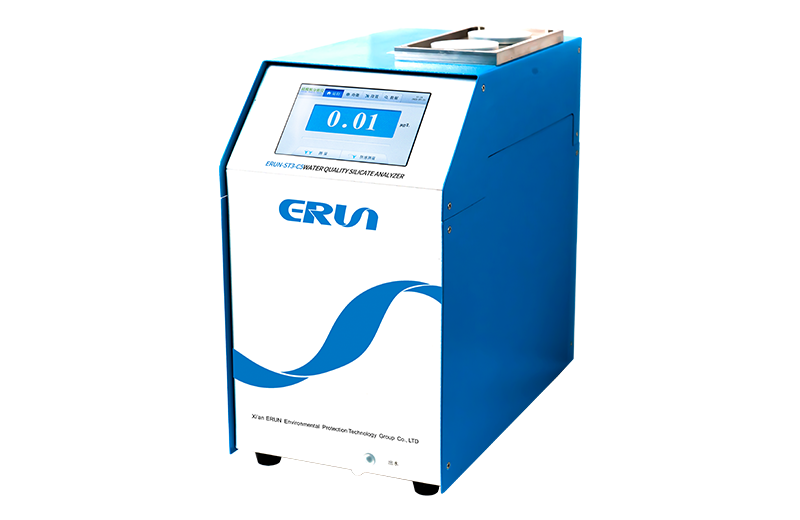
The analyzer is widely used for monitoring mixed-bed effluent and EDI ultrapure water, where silicate must remain at extremely low levels. It is also highly effective in superheated and saturated steam systems, helping prevent deposition and carryover risks.
For industrial users, automated silicate analysis reduces operational uncertainty, protects critical equipment, and supports consistent water treatment performance across multiple processes
Understanding wastewater testing parameters is essential for safe, compliant, and efficient industrial operations. From basic indicators like pH and conductivity to critical parameters such as silicate, accurate monitoring protects equipment and optimizes treatment processes.
By using a dedicated, automated solution like ERUN-ST3-C5, industrial users can simplify silicate monitoring, reduce manual effort, and maintain stable water quality with confidence.


