




Safe drinking water is essential for public health. Microbial contamination is one of the most significant risks in water supply systems because bacteria and pathogens can cause waterborne diseases. Monitoring microbial indicators allows authorities to assess the sanitary condition of water sources and distribution systems. Modern drinking water bacteria testing methods play a critical role in identifying contamination, verifying treatment efficiency, and ensuring compliance with international regulations such as the Guidelines for Drinking-water Quality, the Safe Drinking Water Act (SDWA), and China’s GB 5749-2022 drinking water standard. These methods help laboratories and water utilities detect harmful microorganisms and maintain safe water supplies for communities.

Microbial contamination can originate from sewage intrusion, agricultural runoff, damaged pipelines, or insufficient disinfection. Certain bacteria are used as indicator organisms, meaning their presence suggests possible contamination by pathogens.
International regulations emphasize microbial monitoring as a core component of water safety:
The WHO Guidelines for Drinking-water Quality recommend that E. coli should not be detectable in any 100 mL drinking water sample.
The Safe Drinking Water Act (SDWA) in the United States requires public water systems to regularly monitor total coliform bacteria as an indicator of sanitary integrity.
China’s GB 5749-2022 sets strict microbial limits, including requirements that total coliforms, thermotolerant coliforms, and E. coli must not be detectable in drinking water.
These standards make microbiological monitoring a routine procedure in water treatment plants, environmental laboratories, and public health institutions.
Different microbial indicators are monitored to evaluate water safety. The following table summarizes several commonly regulated parameters and testing methods used in water quality laboratories.
Microbiological Indicator | National Standard Test Method | Typical Limit Value |
Total bacterial colonies | Plate count (Petri dish counting method) | ≤100 CFU/mL |
Total coliforms | Multi-tube fermentation or enzyme substrate method | Not detectable |
Heat-resistant coliforms | Multi-tube fermentation or enzyme substrate method | Not detectable |
Escherichia coli (E. coli) | Multi-tube fermentation or enzyme substrate method | Not detectable |
These indicators provide evidence of possible fecal contamination and help determine whether water treatment and distribution systems are functioning properly.
The heterotrophic plate count (HPC) or plate count method is one of the most widely used microbiological techniques for drinking water monitoring. In this procedure, a measured volume of water is spread or poured onto nutrient agar in Petri dishes. After incubation at controlled temperatures, visible colonies form and are counted.
The plate count method provides an estimate of the total number of viable bacteria present in the sample. Although it does not identify specific pathogens, it is useful for:
Evaluating overall microbial load
Monitoring changes in distribution systems
Assessing treatment efficiency
Laboratories typically incubate samples for 24–48 hours before counting colony-forming units (CFU).
The Most Probable Number (MPN) method, also known as multi-tube fermentation, has been widely used for detecting coliform bacteria. Water samples are inoculated into multiple tubes containing selective growth media. After incubation, the presence of gas or color change indicates bacterial activity.
The number of positive tubes is then compared with statistical tables to estimate bacterial concentration.
This method is highly sensitive and is commonly used for detecting:
Total coliforms
Fecal coliforms
Escherichia coli
Despite its reliability, the method can be time-consuming because it requires multiple incubation stages.
The enzyme substrate method has become increasingly popular in modern water testing laboratories. This approach uses specialized media containing substrates that react with enzymes produced by coliform bacteria.
When bacteria metabolize the substrate, the medium changes color or emits fluorescence, allowing rapid identification of microbial presence.
Advantages include:
Faster detection compared with traditional fermentation methods
Simplified interpretation of results
High sensitivity for detecting E. coli and total coliforms
Many regulatory agencies recognize enzyme substrate methods as approved alternatives for routine monitoring.
The membrane filtration method is widely used for analyzing drinking water with low bacterial concentrations. A known volume of water is filtered through a membrane with a pore size typically around 0.45 μm, which traps bacteria on the filter surface.
The membrane is then placed on selective culture media and incubated. Colonies that develop on the membrane can be counted and identified.
This method offers several advantages:
High sensitivity for low-contamination samples
Direct enumeration of colonies
Ability to isolate specific bacteria
Because of these benefits, membrane filtration is commonly applied in regulatory monitoring and environmental research.
Field testing has become increasingly important, particularly in rural water systems, emergency monitoring, and decentralized water supplies. Portable instruments allow technicians to collect samples and perform microbial analysis directly on site.
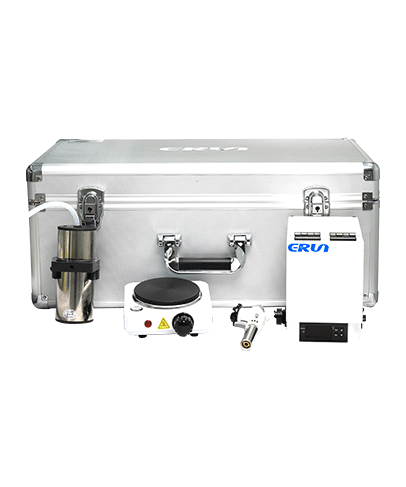
An example is the ERUN-SP3-L portable water microbiology detector, designed for efficient microbial monitoring in various water environments. The instrument supports detection of total bacterial counts, total coliforms, fecal coliforms, and E. coli using prefabricated or powdered culture media. Its multi-functional media holder allows simultaneous incubation of different culture plates, while a built-in incubation system maintains stable temperatures for microbial growth.
The device also integrates a vacuum filtration system with 0.45 μm membranes, enabling rapid microbial sample collection during field sampling. Data recording and USB connectivity allow users to export incubation records to computers or mobile devices. With a compact design weighing less than 3.5 kg and flexible power options including rechargeable batteries and vehicle power supply, the instrument is suitable for applications such as rural drinking water safety monitoring, municipal water quality control, swimming pool sanitation assessment, and aquaculture water monitoring.
Portable microbiological detectors significantly improve the efficiency of water safety monitoring, especially in regions where laboratory access is limited.
Reliable monitoring of microbial contamination is fundamental to protecting public health and maintaining safe water supplies. Modern laboratories rely on multiple techniques—from plate counting and fermentation analysis to membrane filtration and rapid enzyme substrate tests—to detect bacterial indicators. Advances in portable detection technologies are further improving the speed and accessibility of water safety monitoring. As global water regulations continue to emphasize microbial control, the adoption of accurate drinking water bacteria testing methods remains essential for ensuring that drinking water meets strict safety standards and protects communities from waterborne diseases.


