




In 2026, Recirculating Aquaculture Systems (RAS) and high-density farming leave zero room for error. This article explores the critical roles of Dissolved Oxygen (DO), Ammonia, and pH monitoring, and demonstrates how automated control logic can reduce operational costs by over 30%.
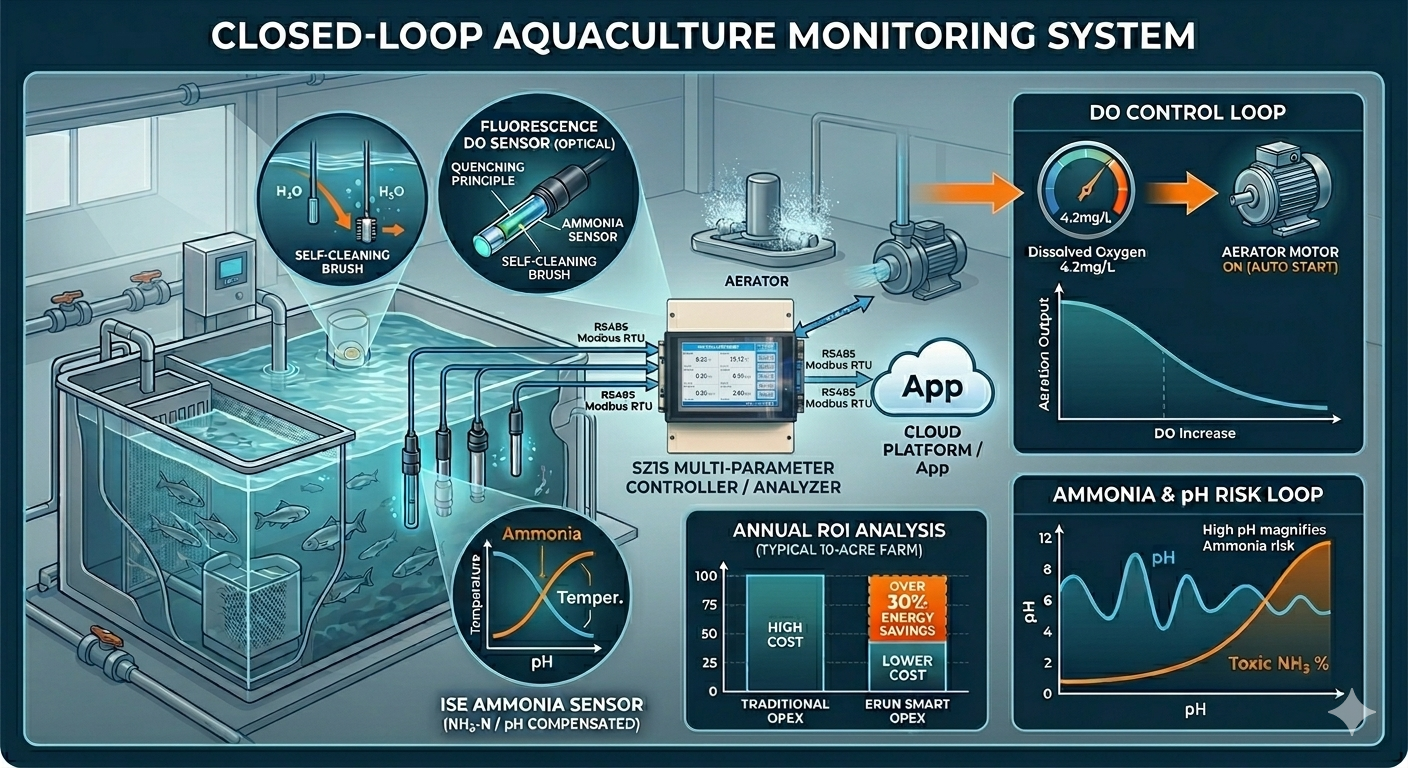
Dissolved Oxygen is the lifeline of any aquatic ecosystem. Traditional 24-hour full-power aeration results in massive electricity bills and risks "pond crashing" if a manual oversight occurs or a motor fails at night.
Traditional Membrane Sensors: Require frequent electrolyte replacement and are highly sensitive to flow speed and H2S interference.
Optical (Fluorescence) Technology: Uses the quenching principle. It requires no oxygen consumption, no frequent calibration, and is immune to chemical interference.For modern smart farms, optical DO sensors are the industry standard for low-maintenance reliability.
By integrating our SZ-Series Multi-parameter Controller, you can implement a sophisticated tiered logic:
Level 1 Warning: DO < 4.5mg/L → Automatically trigger 50% aerator capacity.
Level 2 Alarm: DO < 3.0mg/L → Trigger 100% capacity and send an instant push notification to the mobile app.
Energy Saving: DO > 7.5mg/L → Automatically shut down aerators.
Result: Real-world data shows this closed-loop system reduces electricity costs by 25% to 40% annually.
A common frustration for farm managers is seeing "normal" ammonia levels while fish still show signs of toxicity.
The "pH Multiplier" Effect
Ammonia exists in water as harmless Ammonium ions (NH4+) and highly toxic Unionized Ammonia (NH3). The toxicity of the latter is 100 times greater.
The Science: As pH and temperature rise, the proportion of toxic NH3 increases exponentially.
Monitoring Strategy: A reliable system must feature Automatic pH and Temperature Compensation. Our sensors don't just show a physical concentration; they calculate a "Toxicity Risk Index" based on real-time pH curves.
Ion Selective Electrode (ISE) Applications
For high-density ponds, ISE-based ammonia sensors provide second-level response times, allowing managers to observe water quality shifts immediately after feeding and adjust feed rates accordingly.
Aquaculture environments are humid, corrosive, and prone to "bio-fouling." Consumer-grade sensors rarely survive a single harvest cycle.
1. Anti-Fouling Technology: Sensors must be equipped with Nano-coatings or Automatic Mechanical Cleaning Brushes. This prevents algae and biofilms from covering the sensing window, extending the maintenance interval from 3 days to over 30 days.
2. Anti-Interference Wiring (RS485 Modbus RTU):
Digital signals are mandatory to resist interference from on-site VFDs and aerator motors.
Distance: RS485 allows for lossless data transmission up to 1,200 meters.
3. Strategic Placement: Avoid "dead zones" and areas directly in front of aerators. Sensors should be installed at 1/3 of the pond's diagonal or in the return channel to ensure the data represents the entire water body.
Let's look at the numbers for a typical 10-acre industrial farm:
Electricity Savings: Precision control saves approximately $1,500 - $3,000 USD in power costs annually.
Risk Mitigation: Preventing just one "pond crash" event can save $10,000 - $50,000 USD in stock value.
Efficiency: Automated 24/7 logging eliminates the need for manual testing, increasing labor efficiency by 200%.
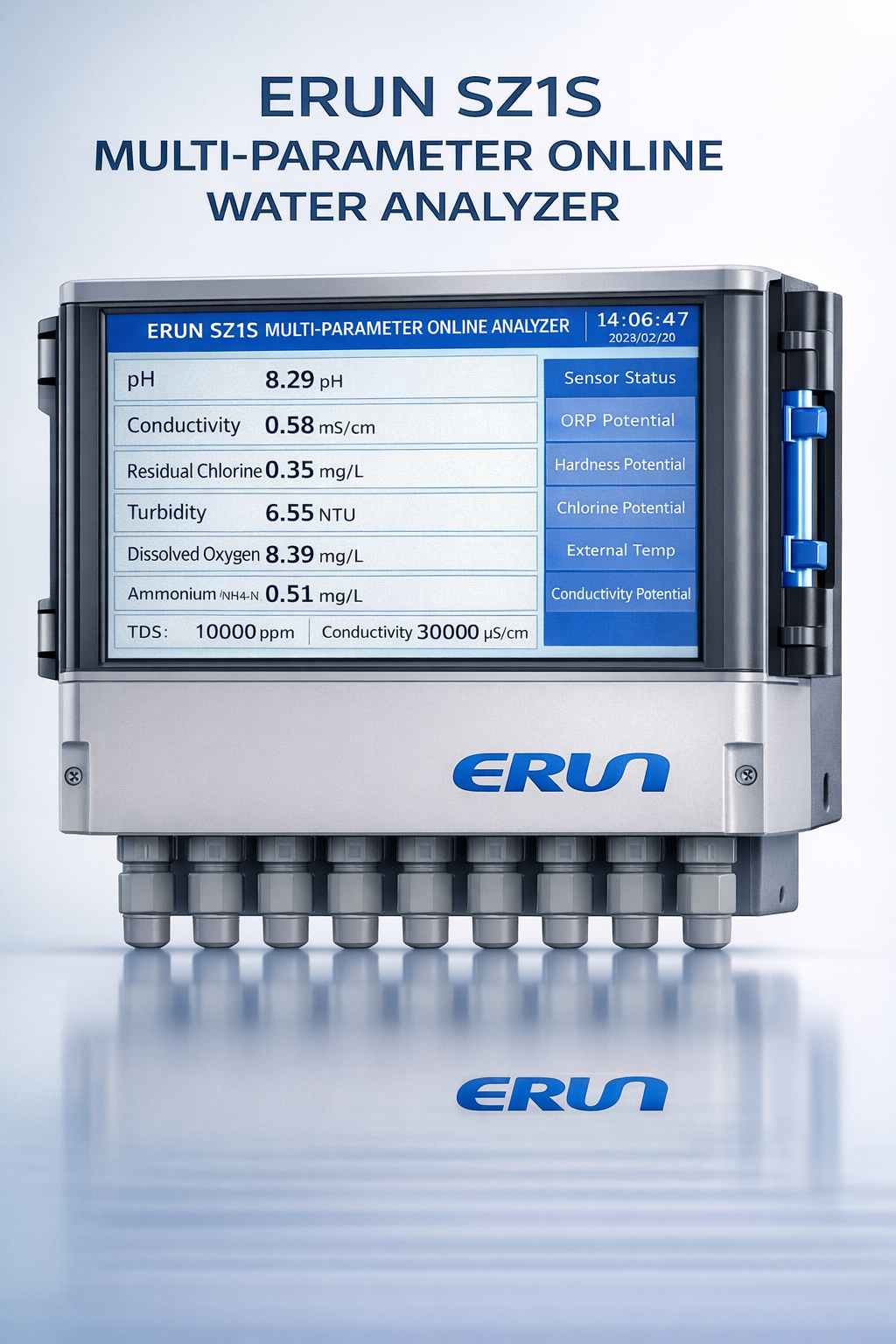
Transitioning from "experience-based" to "data-driven" management is the only way to scale sustainably. Our SP4/SP9 Series water quality analyzers are designed to be your 24/7 digital "safety net."


